Sunday, January 12, 2014

Sport Fishing in Costa Rica....Tips to Finding the Fish!

With over 750 miles of coastline to explore, anglers fishing in Costa Rica have a multitude of options to try their luck for both inshore and offshore sport fishing in this marine rich part of the world. It’s a big ocean out there, and if you don't know what you are doing you can spend a whole day driving around burning expensive gas and finding absolutely nothing to put a bite on a hook! The main key to a successful day of offshore or inshore fishing is frankly knowing where and how to find the fish!

Naturally, there is no replacement for local expertise when it comes to finding fish, they live and breath the sport and no one
wants you to have a good fishing day more than your Captain and First Mate, so lean on them for the best results! Every good captain knows where to find the fish, but if you are out for a day on your own, or if you are practicing to become the next best fishing captain for your next lifetime, you may find the following information helpful while exploring some new (or old) fishing grounds.
The first and foremost important tip for finding the fish is watch for Variation. Variation can come in several forms, some of them very obvious and others more subtle, so here are some helpful hints for you in case you are headed out for a day of great fishing action!

Los Corrientes (The currents)
The most recognized tried and true method to finding gamefish in Costa Rica is fishing in “los corrientes”. These currents can be
spotted by a subtle change in color and in the temperature of the water. Baitfish and predators tend to be more plentiful in these currents, so an experienced captain will generally work the edges of “los corrientes” to see how the action is going before moving on to other options. When fishing from the areas of Quepos, Jaco, or Herradura, charters will find “los corrientes” about twenty-five to thirty miles offshore during peak billfish season and will generally head that direction to start their day. For that reason, it is almost always recommended to plan at least a 3/4 to Full Day of fishing to allow enough time to get into the really thick action!

Ocean Floor Geography

Invisible to the naked eye, the underwater geopgraphic structures such as canyons, reefs and other natural formations can increase
the flow of ocean currents, increasing the chance of good angling or even extreme angling in particular areas. The rapidly moving currents can trap bait fish allowing the large game fish to move in seeking an easy feeding session on the trapped bait. Similar to the seasonal currents, these fish rich currents are often spotted by looking for subtle changes in the water color or surface ocean temperatures. Professional and experienced Sport Fishing Charter Captains for the Costa Rican shores will always have one eye on the bottom (think GPS) and one eye on the surface looking for those subtle changes that are going to lead them to their prize.

Floating Debris
The rainy season in Costa Rica may not be the optimal months for hooking the larger Gamefish (though they are prevelent year round,
so don't let the rainy season scare you away!), but it is the hottest time of year for Dorado, including Bull Dorado which can often times come in weighing over fifty pounds! Since the heavy rains in the mountains of Costa Rica run out the local rivers located in the Quepos, Jaco and
Herradura areas, the experienced fisherman knows that fish love structure and obstacles, even temporary formations resulting from debris washing out to sea from the rain swollen rivers, so its always a good idea to head that way. Fishing deep around areas such as weed lines, floating pallets, or logs can yield a great Dorado hit, meaning a possible great dinner will be on the table that night! Other game fish can be found beneath the debris as well, so this is an area that is especially worth an anglers undivided attention!!

Underwater Structure
Wrecks and reefs provide structure or should we say a vacation home for large bottom fish including Cubera Snapper and Grouper. This so called structure is also home to plankton and other small organisms that serve to attract baitfish which in turn attract the bigger game fish on the prowl for an easy meal. Keep in mind.....the main structure area may be overfished, while potential surrounding "satellite" sites around the structure can often be teaming with life as well, so keep your eyes and your fishing lines open. Larger Gamefish often hang out at these quieter satellite sites, so work that whole area for best results.

Slicks
Its a big ocean out there, but sometimes you can see obvious "slicks" on the surface, so keep your eye out for any and all oily slicks on the water's surface since these can often be a good sign for hungry for action anglers. Big game fish such as Dorado, Tuna, Marlin and Sailfish when feeding are chasing bait to the surface which releases fish oils, resulting in the "slicks" that you may witness. If you are lucky, this very slick could hold the trophy catch you have been seeking!

Birds
Offshore birds are always fishing in Costa Rica, so it is always a good idea to keep an eye on the sky as well! Searching for bait pods, tuna feeding, or trolling Billfish, pay particular attention to the Frigate Birds who are great spotters, especially those that are circling in one particular location. The experienced fishing guide knows that even a lone Frigate Bird can lead you to a trophy Tuna, Marlin or Sailfish.

With prices high and time limited during a Costa Rica visit, when fishing offshore in our gamefish rich waters of Costa Rica, the
importance of local expertise cannot be overstated. Natural underwater geographic structures are consistent and well know and local Costa Rica Fishing Guides now have the ability to record the best fishing spots to GPS, giving them the edge when fishing for big game fish in these open waters.....something someone who does not live in the area is never going to know about. In addition, an experienced captain and mate will have developed keen eyes and experience, with some experienced Captains and First Mates able to spot schooling Tuna miles away just by looking for disturbed water and many of the other hints listed above.

So on your next Sportfishing outing while fishing in Costa Rica (or wherever!), keep the above hints in mind for best results, and
be sure to find out more about Pacific fish species, fishing seasons, fishing reports, and the local weather conditions beforehand by checking out our link on fishing in the Quepos, Costa Rica area via your local Costa Rica Vacation House Rental or Costa Rica Hotel, where they are happy to steer you in the right direction for an unforgettable day of Game fishing in an area that still boasts some 17 IGFA World Records! You could be the next World Record Holder!! FISH ON!!!!

Author:
Kimberly Barron, originally from Malibu, California has lived in Parismina and Manuel Antonio, Costa Rica for 20 years. Starting as a certified tour guide, she spent 15 years managing fishing lodges on the Caribbean Coast and later 4* & 5* Hotels on the Pacific Coast of Costa Rica. Currently semi-retired, Kimberly still works as the Marketing Director for Byblos Resort & Casino and owns and operates her own Costa Rica Vacation Rental Home business at Manuel Antonio Rental Homes!

Saturday, December 21, 2013

Christmas Season Shopping in Costa Rica? Try the Golfito Duty Free Zone!

Don’t let me be the bearer of bad news, but once again, Christmas is just around the corner. For those of you that have been lucky enough to survive another year of this recession, it’s time to start thinking about Christmas shopping. If you are considering some big ticket items, the duty free zone of Golfito might be just the place for you!

A Little History:
Once a bustling banana port, from 1938 to 1985, Golfito served as the headquarters of United Fruit’s banana operations in the southernmost part of Costa Rica. Creating an economy that had previously not existed, unfortunately the mid-1980s brought declining markets, higher export taxes, worker unrest and banana diseases forcing United Fruit’s departure from the area. Though some of the plantations successfully converted to the production of African Palm Oil, this move was not enough to sustain the job loss and economic blow caused when the company departed. Attracted by the World Class fishing within the Golfo Dulce region, Sport Fishermen have helped stimulate the development of new Costa Rica Hotels & Lodges, creating a flourishing tourist industry in the area. Nonetheless, the Golfo Dulce region and more specifically, the town of Golfito, have continued to struggle for survival, even after close to 20 years of economic stimulus in the form of a Duty Free Shopping Zone.

Government Incentives:
In the 1990’s, in an attempt to boost the region’s economy, the Costa Rica government approved a duty-free facility (déposito libre) in the northern part of the Golfo Dulce zone. Just the mention of the town of Golfito, brings the image of thousands of Ticos on any given day bustling around the rows of this fairly run down mega shopping complex, giving life to an otherwise dying town while shoppers hustle and hustlers shop. Keep in mind….the duty-free shopping is for Costa Rican Nationals and legal residents only, with the most popular purchases being the bigger ticket items. Unfortunately, as you will see below, this is not like a Sunday visit to the local mall, many restrictions apply which can complicate the shopping process, so be sure to read the details.

Rules and Regulations:
The Duty Free Zone was created to help stimulate visits to the region by giving Costa Rican residents a tax free zone to shop for their purchases. To get the most out of these visitors, specific rules were established in order to legally make these tax free purchases. First, exemption from sales taxes is only valid twice a year, with a total purchase amount that cannot exceed $1000 per buyer, per trip. Second, you must stay overnight in Golfito before taking advantage of the tax-free shopping, a requirement enacted to support the area’s family owned “cabinas” and boutique hotels. Third, as a guarantee of your overnight stay, a shopping authorization card (TAC) must be requested at the Customs Offices the day prior to shopping. Hours are Tuesday-Saturday from 8am-8pm, Mondays from 1pm-8pm and shoppers are required to present their valid Costa Rican “cedula” (identification card) when applying.

Hours and Shopping Limits:
When you begin your shopping at Golfito, its recommended to get an early start. Stores open from 8am-4:30pm Tuesday-Saturday and 7am- 2pm on Sundays. Stores are closed on Mondays. When checking out, you will be required to show the store personnel your shopping authorization card, so keep that handy. Remember, one card gives you the right to make a purchase for up to $1,000, though you can combine two cards (no more) for a total of $2,000. The other card can only belong to first-degree relatives such as parents, children, siblings or spouses. Naturally, there are “gavilones” or “tipos” that hang around the area that can arrange that you have sufficient “TAC” cards from “family” to make as many purchases as you need while in the area. Of course, I don’t condone or recommend these services, though they are amazingly efficient and quite convenient:-).

Why go Duty Free?
Though Golfito is no short drive, and the entire process is not exactly convenient, keep in mind that products are not subject to most import taxes, nor the normal 13% Costa Rica sales tax, as well as most products are highly discounted, so thrifty shoppers from around the country can save up to 50% on certain items throughout the year. For those looking for smaller ticket items such as perfumes, cosmetics, liquor, cigarettes, small appliances, tires, computer items, and an assortment of household goods, you might want to save going thru some of these inconvenient restrictions and drive a little further South to the Costa Rica-Panama border. At the border crossing, shoppers can purchase duty-free goods on a mystery strip of shops located between the two borders in the town of Paso Canoas. (You enter one door on the Costa Rica side, and exit the other side of the store on the Panamanian side!) No restrictions apply in this area, and both duty free zones can provide affordable delivery of your purchases throughout the country, but be sure to negotiate the price first!

So if you are planning a shopping jaunt to the port town of Golfito, consider making a short relaxing getaway out of the trip. (You’ll need it after the Golfito zoo.) With the new Costanera Sur highway, the drive is only around three hours from Manuel Antonio/Quepos Area Hotels, and the entire area offers small marinas, yachting and boating services, excellent sport fishing,
as well as easy access to some of Costa Rica’s most beautiful National Parks and protected areas. Although much of the tourism in the Golfito area focuses on the sport fishing industry, other water sports and beach activities are also popular pastimes, with incredible surfing beaches to the south of Golfito such as Playa Pavones; best known as home to one of Zancudo, Pilon and the famous the longest left hand breaking waves in the world. The friendly people of the area, and the fabulous natural wonders that abound make Golfito and the Golfo Dulce more than just a shopping excursion, the area is truly a
beautiful and relaxing place to stop and see more of fabulous Costa Rica! Happy Shopping!

Author:
Kimberly Barron, originally from Malibu, California has lived in Parismina and Manuel Antonio, Costa Rica for 20 years. Starting as a certified tour guide, she spent 15 years managing fishing lodges on the Caribbean Coast and later 4* & 5* Hotels on the Pacific Coast of Costa Rica. Currently semi-retired, Kimberly still works as the Marketing Director for Byblos Resort & Casino and owns and manages her own Vacation Rental Home BusinessManuel Antonio Rental Homes.

Sources:
http://costarica.com
http://www.golfito-costarica.com/golfito/
http://en.wikipedia.org/wiki/Golfito
http://depositodegolfito.com/dlcg/

Tuesday, December 10, 2013

Celebrate a Feliz Navidad in that Special Costa Rican "Tico" Tradition!

For those that haven´t noticed, Costa Rica Christmas decorations and discount sales began long before Halloween dates passed. This brings to mind some of our own special ¨Tico¨ Christmas traditions found in our beautiful tropical locale. Be it the kids that start their ¨summer¨ vacations in December, workers that receive their yearly ¨aguinaldo¨ (an automatic one month salary Christmas Bonus from their boss), or the massive preparations of the traditional Christmas Tamales……whichever it may be, ¨La Navidad¨ is just around the corner!

Is there a chance there will be snow? Well that is highly unlikely since Costa Rica is located only 11° off the Equator, but Costa Ricans are fascinated by snow, since few have everseen the real thing. Many of the floats in the yearly ¨Festival de la Luz¨ planned this year for Saturday Dec 14th at 6pm passes each year down the main street of Paseo Colon and Second Ave in San Jose. Floats are decorated in fluffy white cotton fabrics to give the impression of snow, and many holiday participants threw white confetti at each other, also meant to simulate snow. This year, the municipality once again is put a firm hand down on the throwing of this confetti due to safety factors, as well as the high cost of clean-up afterwards. In years past, there have been many complaints from innocent bypassers walking to work who were suddenly blanketed from head to toe in the white confetti.

Costa Rica´s animal and even more specifically the horse lovers wait anxiously each year for ¨El Tope Nacional¨ usually held the day after Christmas on December 26th. This parade includes marching bands, clowns and other strange characters, but is most popular for featuring some 6000 of Costa Rica´s most beautiful high stepping horses, as well as the famous colorful hand painted oxcarts. These fabulous detailed oxcarts were originally pulled by people, then by oxen, and now are rarely used in day to day work, but are considered historical works of art cherished by the Costa Rican people.

The traditional Christmas tree, most often decorated in hues of blue, gold, silver,
white and maybe a little red, as opposed to the traditial gold, green, and red, is accompanied by another important decoration, the ¨Portal¨. The Portal is the representation of the birth of Jesus, with the figures of Mary, Joseph, the three wise men, the ox and the mule. The most important figure in Costa Rica is the Baby Jesus. In Costa Rica, Santa Claus doesn't bring the Christmas gifts, those are brought by Baby Jesus on Christmas Eve. Called ¨La Nochebuena", it is said that while the family is sleeping, the Baby Jesus appears at the portal and the gifts magically appear beneath the tree for the morning of the 25th. That is when all family members typically gather around the tree and pray, thanking Baby Jesus for all the good that has passed that year, followed by the opening of the gifts Baby Jesus has bestowed upon them.

The Christmas menu can be extensive, but the focus is around the preparing and eating of typical Costa Rican "tamales". The true "tamal" base is of ground corn, which is
made into a thick dough or "masa" that is later filled with small amounts of rice, small slices of potatoes, vegetables, green olives, pork or chicken, and finally wrapped in fresh plantain leaves. They are then tied with string in pairs (known as ¨Piñas¨) and boiled until cooked through and through. Making "tamales" is a cherished tradition that involves the participation of many family members and friends, as this is a slow and laborious process taught by Grandmothers from one generation to another. I am lucky enough to have many Tico friends that take pity on my lack of knowledge (or motivation!) to make the tamales and each year give me the gift of the famous Tamal!

Easily, the most chaotic and perhaps crazy activity (and most entertaining by far)of the holiday season is the "Zapote Bullfights", held in the town of Zapote, just outside of downtown San
Jose. It is there that they build a special ¨Redondel¨ or Bull Ring, as well as erect a yearly improvised amusement park complete with carnival rides, amusement park games and a selection of "chinamos", or improvised food stands. It´s important to note that in the Costa Rican bullfights, the bulls are never harmed, or killed, though the “bullfighters” do not always fare so well (see videos below). The most prestigious cattle ranches provide the bulls for free and it is considered an honor to have their bulls included in this event. Beyond the actual riding of the large bulls (generally done in Costa Rica with NO hands), much more frightening are the bullfighters in the ring. These consist of ¨normal¨ people dressed in all kinds of crazy outfits, that willingly get into the arena in mass without any professional preparation to ¨fight¨ or spook the bulls, encouraging them to chase them around the arena. Incredibly, very few people get hurt or gored during this event, though the activity is definitely entertaining and a big headache for the local Red Cross which voluntarily provides it's emergency services during this yearly event. It´s interesting to note that this festival year after year draws Costa Ricans from all parts of the country and crosses all social classes.


The Holiday Season then officially ends on January 6th, the day the three wise men arrived and saw Baby Jesus for the first time. That day all the neighbors gather and say a special prayer for the Baby Jesus. This prayer is based on the rosary and traditional Christmas carols. Of course after the prayer, there's the indulging in
the famous Costa Rica coffee, along with more "Tamales", "Rompope" (Costa Rican Egg Nog), "Aguadulce" (a Sweet Water like juice) and all kinds of typical baked goods and other traditional beverages. Don´t forget the grapes (no seedless ones here) and the apples, which are considered very special treats here, as they are not readily available or very affordable and kids love them!

Lastly, Costa Rican Hotels and tourism operations around the country eagerly await the arrival of December to usher in their peak tourist season when winter weary snowbirds look to bask in the warm tropical weather and waters of Costa Rica, as well as enjoy the bounty of adventure tours and the beauty of Costa Rica´s incredible natural resources. I hope if you are reading this you are lucky enough to share in our bounty this festive Holiday Season!

MERRY CHISTMAS OR FELIZ NAVIDAD Y PROSPERO ANO NUEVO!


Author: Kimberly Barron, originally from Malibu, California has lived in Parismina and Manuel Antonio, Costa Rica for 20 years. Starting as a certified tour guide, she spent another 15 years managing fishing lodges on the Caribbean Coast and later 4* & 5* Hotels on the Pacific Coast of Costa Rica. Currently semi-retired, Kimberly still works as the Marketing Director for Byblos Resort & Casino owns and manages her own Vacation Rental Home business Manuel Antonio Rental Homes.

Friday, November 29, 2013

Alert!! Don't make a "Fool" of yourself this December when in Costa Rica!

Are you a fool most days, just on April fool’s Day, or surprise!.... you could be proven a fool while in Costa Rica late dates in December! December 28th in Costa Rica is “Dia de Los Inocentes” (Day of the Innocents), commonly considered “Fool’s Day”, which to us North Americans is customarily celebrated on April 1st, also commonly known as April Fool’s Day in the United States.

Will you fall for any pranks or jokes on December 28th? Will you get caught off guard?? Costa Rican’s love to pull off large and small pranks on their friends and family on this yearly day of tom-foolery is a yearly event. Everything from the simplest of jokes, to the common gesture of putting a sign on your back that might reads “kick me” or “looking for love”, to more vulgar jokes such as wrapping dog poop in toilet paper, lighting it on fire and waiting for the nearest “Innocent” to stomp out the fire, or another favorite in our humid climate, leaving a melting chocolate candy on someone’s seat so when they sit down, it later looks like they pooped in their pants when they rise. All pretty funny, as long as you are not the innocent fool that the prank gets pulled on!!

The history of “Dia de Los Inocentes” dates back some 2000 years. The origin of the “Day of the Innocent Saints” is very different in modern times from it’s previous inception as the day in which there was a slaughter of all male children of 2 years or younger. Ordered by King Herodes, he was voted King of the Jews by the Roman Senate, and was considered the Roman Client King of Israel. Not to be confused with his son, Herod Antipas, also of the Herodian dynasty, the elder Herod is known for his colossal building projects in Jerusalem and other parts of the ancient world, including the rebuilding of the Second Temple in Jerusalem, sometimes referred to as Herod's Temple. He was described as "a madman who murdered his own family and a great many rabbis.” Herod is reported in the Gospel of Matthew as personally ordering the Massacre of the Innocents. Most recent biographers do not actually regard this as an actual historical event, though the legend lives on and scripture has been found that could support the legend.

According to Matthew, shortly after the birth of Jesus, Magi (the three wise men) from the East visiting Herod to inquire as to the whereabouts of "the one having been born king of the Jews", as they had seen his star in the East and therefore wanted to pay him homage. Herod, who himself was considered King of the Jews, was alarmed at the prospect of a newborn king possibly usurping his rule one day. In the story, Herod assembled the chief priests and scribes of the people and asked them where the "Anointed One" was to be born. Their answer, Bethlehem. Herod then sent the Magi to Bethlehem, instructing them to search for the child and after finding him, to "report to me, so that I too may go and worship him". However, after they had found Jesus, the Magi were warned in a dream not to report back to Herod. Upon realizing that they would not communicate the exact location of the birth of Jesus, an infuriated Herodes ordered the massacre of all boys two years and under in Bethlehem and its outlying areas.

In regards to the Massacre of the Innocents, although in reality Herod was certainly guilty of many brutal acts, including the killing of his wife and two of his sons, no other known source from that period makes any references to such a massacre. Since Bethlehem was a small village, the number of male children under the age of 2, would probably not have exceeded 20 or so. This could be one of the reasons for the lack of other sources for this questionable account of history, although Herod's order in Matthew 2-16 includes those children in Bethlehem's vicinity meaning the massacre area could have measured a significantly larger amount numerically and geographically more in the area of some 14,000 children. The infants, known in the Church as the Holy Innocents, have been claimed as the first Christian martyrs.

How this turned into an annual celebration of trickery remains a mystery throughout the country. It is said that during the Middle Ages, pagan rites were introduced in to the celebration that for some time came to be known as the “Celebration of the Crazy People” (“Dia de Los Locos”).
It was celebrated between Christmas and New Year, a direct show of the significance of Jewish and Christian sentiments during the holy season. Out of this shift in sentiment, over time a new tradition began that combined the underlying pagan sentiment with and the light hearted Christian monks teachings, with the main purpose of the day being the moment to pull all types of pranks on unsuspecting family and friends. Pranks are known as “inocentadas” and their victims are called “inocentes”, or alternatively, the pranksters are the "inocentes" and the victims should not be angry at them, since they could not have committed any sin. It is still not understood how such a morbid historical event could be converted over the centuries to celebrate a completely opposite sentiment and will likely remain a mystery to all.

So if you find yourself in Costa Rica or most any Latin American country on December 28th, don’t be surprised if you are the butt of someone’s joke or prank. Be warned, the Costa Rican culture has a wonderful sense of humor, meaning no one is safe on this day, so don't be a FOOL!!

Author:: Kimberly Barron, originally from Malibu, California has lived in Parismina and Manuel Antonio, Costa Rica for 20 years. Starting as a certified tour guide, she spent 15 years managing fishing lodges on the Caribbean Coast and later 4* & 5* Hotels on the Pacific Coast of Costa Rica. Currently semi-retired, Kimberly still works as the Marketing Director for Byblos Resort & Casino and owns and operates her own Costa Rica Vacation Rental Homes business called Manuel Antonio Rental Homes.

Tuesday, November 12, 2013

“Peach Palm”, a sorry translation for the popular Pejibaye Fruit in Costa Rica


When traveling or living in a foreign country, experimenting with foods, fruits and customs of the host country should be a part of your adventures. In this blog post, we are going to focus on a popular Costa Rican fruit, the “Pejibaye”. One of Costa Rica’s most readily available fruits, they can be found throughout the country’s farmer’s markets, supermarkets and street corners. It’s unique flavor, nutritional value and vivid colors, makes this fruit an interesting addition to any Costa Rican cuisine.

Pejibayes grow hanging in large clusters of 50-100 fruits, with some clusters having as many as 300 fruits, weighing 25 lbs or more,
and located high upon very spiney Palm Trees that often attain heights of 65-100 ft. These Palms are the same species that produce Costa Rica’s famous Hearts of Palm, another very popular offering found throughout this country. Available in a variety of colors ranging from yellow to orange to red to green, the waxy generally orange colored skin of the Pejibaye fruit is a favorite throughout the country.

The starchy texture and potato like consistency of the Pejibaye, requires a certain amount of cooking and preparation in order to
make them eatable, and to bring them to the height of their flavor. The preferred method of preparation is to place the entire fruits into large pots of well-salted boiling water, then cooking them for anywhere from 1-2 hours. Eventually, the pejibayes soften (to a certain extent), at which time you can then peel them, cut them in half, removing the large central seed, and place them on a plate in halves or quarters. At that point, the Pejibayes are most commonly served with a small dollop of mayonnaise (or sometimes dipped in butter) helping to contrast the natural dryness of the fruit, and bringing out their natural subtle sweetness. The brilliant orange fleshy color is maintained throughout the process and enhances the natural presentation.

Roadside vendors sell boiled Pejibayes at makeshift stands all across the country, as well as the weekend farmers markets offer the ready cooked fruits and raw “racimes” of the fruits weekly. Pejibayes are so popular, that even some of the most prestigious supermarkets throughout Costa Rica have the boiled fruits for sale at all hours in their vegetable sections.

The Pejibaye, Bactris gasipaes, is also referred to as the “Peach Palm”, and is thought to be indigenous to Amazonian areas of
Colombia, Ecuador, Peru, Venezuela and Brazil, and found in other tropical locales such as Trinidad, Panama, having been cultivated and distributed by Indians for centuries. The fruit is plentiful in a literally wild state on the Atlantic side of Costa Rica, as well as large farms that cultivate the fruit for national and international distribution can be found there. Although not as common in other areas of Central America, it is still found throughout Nicaragua, Honduras and Guatemala, as well as Panama since the Pejibaye fruit requires a tropical climate with the ideal average annual temperature ranging between 64°F and 75°F (18°-24°C). At low elevations with excessive rainfall, the palm will not produce viable fruits.

The biggest downfall of this hearty little fruit is that an average 100 grams of Pejibaye fruit contains a hearty amount of
calories, definitely eliminating them as an option for anyone watching their weight. Nonetheless, if you find that you just cannot resist the allure of this tropical gem, the following is one of the most popular recipes to make the most of your experimentation with the ever so popular Costa Rican “Pejibaye”.
Sopa de Pejibaye Recipe (Palm Fruit Soup)

10-12 pejibayes
3 cups chicken stock
1 Tablespoon vegetable oil
3 cups milk
1 onion chopped
3 cloves garlic chopped or pressed
1 red, yellow or green sweet pepper.
salt and fresh ground black pepper to taste

Wash and boil the pejibayes in salted water until soft (about 1.5 hours). Remove from the water, and when able to handle, peel and core them. Puree the pejibayes with the chicken stock.

Sauté the onion, garlic, and pepper in the oil until the onions are clear, then combine all the ingredients in a stock pot and simmer for another 10 minutes or so. Enjoy!

Author: Kimberly Barron, originally from Malibu, California has lived in Parismina and Manuel Antonio, Costa Rica for 20 years. Starting as a certified tour guide, she spent 15 years managing fishing lodges on the Caribbean Coast and later 4* & 5* Hotels on the Pacific Coast of Costa Rica. Currently semi-retired, Kimberly still works as the Marketing Director for Byblos Resort & Casino and owns her own Costa Rica Vacation Rental Home Business Manuel Antonio Rental Homes.

Wednesday, October 23, 2013

Geckos of Costa Rica.....Friend, Foe or a Little of Both?

If you are planning a visit or to live in Costa Rica, you had best make peace with the local Gecko population. Hearty little lizards, they are ubiquitous throughout the country and although they are not always a welcome sight to all, you need to rethink this as they are actually working on your behalf!

The first encounter I had with Geckos when I arrived to beautiful Costa Rica was at night as we sat quietly rocking our chairs on
the porch enjoying the warm evening tropical breezes. As we watched, the overhead lights literally became the local pub crawl for the Geckos who would happily belly up to the insect bar and make a quick meal of hapless species that sadly were lower on the food chain than these cute little lizards. Although considered nocturnal, that does not mean that these little guys don't work around the clock, as you will likely see them any time of the day or night working on lowering the abundant tropical insect population.

Not previously having planned on my life being inhabited by a flurry of tiny meat eating mini-dinosaurs, it took a little time to get used to my new found friends and embrace their helpful presence which includes them periodically making a sound that is distinctly like they are laughing at you, as well as their constant deposit of poopy gecko presents. I'm not particularly big on that part!

It is said that having Geckos in your house is actually a good omen. Whether that is true or not is up for dispute, but the fact that these lizards are handy little pest controllers is impossible to argue after you have seen them in action.


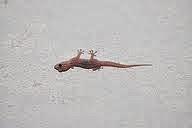
These little lizards ability to scurry up a wall, hang upside down from a roof or beam, cling to all surface types including wood, glass, metal, plastic, fabric, etc, as well as maneuver on smooth, bumpy or even wet surfaces is bound to make even the biggest lizard skeptic find a new admiration for these versatile little critters.

Happy little guys, if you are sitting around and hear a surprisingly loud laughing sound.....incredibly, its the Geckos! How can you not fall in love with little lizards that laugh while they work? Its really quite astonishing the hearty chuckle that comes from these little reptiles! They are said to make this hee hee hee sound when defending their territory or for calling mates, but sometimes I suspect they are just laughing at me! (Do I sound paranoid?) Click here to hear one!

Geckos are also hearty little pro-creators. The females normally lay two eggs at a time in secure hidden places that can sometimes
include inside an old pair of shoes, between clothes not worn for some time, covey holes of walls and closets, window moldings and any number of surprise spots that the little
white eggs might tumble out of when least expected. Since they will often lay eggs in a community spot for more security, it can be quite a little scrambled egg mess when sliding an unsuspecting foot in the old shoe full of pebble sized eggs. Ew. Just another good reason (excuse?) to wear flip flops daily! Surviving Gecko eggs will take anywhere from 5-8 weeks to incubate, and these little guys can plan on a life span of around 7-9 years total.

Truly one of the most fascinating aspects of the Gecko life is their unique ability to climb and stick to just about anything! Most
people think or assume they have suction toes that allow them to cling. Although some species do, upon closer examination to many of the most common Geckos, they do not have cup shaped toes that allow them to push air out and stick. Okay, so you might think its the power of friction helping them stick to walls, However, that becomes hard to explain when they are hanging completely upside down from the roof and not making any friction. Sticky feet would seem like the most logical answer, however upon scientific study, Geckos don't have any glands to
produce a sticky like substance, so rule that hypothesis out. So how do they do it? Scientists have wondered the same things for years and upon further study they have discovered that the magic lies in the interaction between molecules. Scientists call this the "Van der Waals Force". Say what?? Through further examination, it would appear that each Gecko toe has a network of millions of tiny hairs (Setae) that are tipped with tiny little pads that produce
a molecular reaction that makes those microscopic little pads work like little sticky hooks. Combine that with the recent discovery that these lizards have a special secretial gland that allows them to absorb and secrete liquid at the same time and this combines to make this little fellers even stronger than a steroid soaked bodybuilder training for the Olympics! In fact, Geckos are so strong they can even hang from a single toe!! Quite a feat for such a small creature and even more so for a reptile! I wonder if we should be harnessing this knowledge and ability for more useful purposes in our normal day to day life?

If variety is the spice of life, then there is plenty of spice in Costa Rica! Geckos can be found on almost every continent except Antartica (they're not big on cold), but Costa Rica and its warm temps are definitely the perfect tropical home for these little guys. Of the 750 species found worldwide, Costa Rica boasts 9 Gecko species within its borders. Coming in a variety of colors, sizes and habitats, the only negative thing I can say about the Geckos is they are sadly not potty trained. Depositing their little (and sometimes not so little) white & black poopy pile wherever they desire is definitely one of the negative sides of the whole
Gecko experience. Be forewarned......they have no problem and I suspect may even aim to sometimes leave their "deposit" right on your unsuspecting person. I have been poo bombed by many a Gecko over the many years I have lived in Costa Rica, and though I am not happy about it, when you watch these cute litte guys and their insect killing ability, as well as hear that enthusiastic laugh they share, its hard not to find them to still be one of the more appealing members of the reptile family!

Beyond the Gecko's excellent insect control capabilities, they possess other distinctive characteristics that are rather endearing.
Geckos have the ability to camouflage themselves by changing their colors to help them blend into their environment while hunting for food. They also can change their colors to reflect emotions such as fear, excitement or anger. Therefore, if you see a red faced gecko....I guess it would be best to play it safe and give it a wide berth! Another rather impressive characteristic of the Gecko is their ability to detach their
tail. Got someone hot on your ass? Just detach that tail and leave them something to chew on while you escape to grow a new one. Must be handy, and crooks would love that ability! Lastly, the third amazing characteristic is the ability to change the aperture of the pupil of the eye while in bright
sunlight to be a single vertical row of pinhole openings making the iris resemble the color of their skin. In fact, the majority of Geckos actually lack eyelids and instead have a transparent membrane which they lick to clean. They also possess an incredible night vision capability with their eyes being some 350 times more sensitive to light than the human eye. Pretty handy abilities for increasing their overall Gecko warrior abilities and pretty cool stuff for a mini reptile looking to survive in the Costa Rican jungles (or in my house)!!

So are you impressed yet? Well you should be, as these little creatures have managed to evolve and perfect their talents to become some of the most efficient jungle inhabitats to be found! So on your next vacation, be sure to watch around your Costa Rica hotels, homes, sodas or jungle areas for the opportunity to observe, befriend and photograph your new little lizard companions. Not only will they laugh along with you, but they will make every effort to keep you mosquito bite free! So it just goes to show....it's not just the "Ticos" that are friendly, their lizards are friendly too!! Now that surely is another sign of Pura Vida!!

Author:
Kimberly Barron, originally from Malibu, California has lived in Parismina and Manuel Antonio, Costa Rica for 20 years. Starting as a certified tour guide, she spent 15 years managing fishing lodges on the Caribbean Coast and later 4* & 5* Hotels on the Pacific Coast of Costa Rica. Currently semi-retired, Kimberly still works as the Marketing Director for Byblos Resort & Casino and owns her own Costa Rica Vacation Rental Homes business, Manuel Antonio Rental Homes.

Monday, October 7, 2013

“Carnavales” in the City of Limon: An Annual Costa Rican Tradition!

When: October 11-21, 2013 (annual event)
Where: Limón
Cost: Free
Hours: All hours!!

If you are planning a visit or vacation in Costa Rica soon, in only days Costa Rica's port town of Limón on the Caribbean side of the country, converts to an all out party to celebrate “Carnavales”! Vaguely disguised around celebrating Columbus Day (October 12th) or “Dia de Las Culturas” (as it is known in Costa Rica), locals as well as every strange character you can think of join together in the overconsumption of alcohol, while dancing and parading the streets of Limon to the popular Latin beats of blaring Calypso, Reggae, Samba, Salsa and many other tropical rhythms! A good time is generally guaranteed, all in the name of history, culture and a legitimately good reason to Party!

Background of Limon:
Limon (Spanish for Lemon) is the largest “city” on the Caribbean side of Costa Rica, as well as the center for Costa Rica’s largest commercial shipping port in nearby Moin. Serving as the capital city of the Limon Province, Christopher Columbus set anchor in 1502. It is said that Limon was named after the large lemon tree that used to grow where the City Hall is now located, but that rumor has not substantiated over the years.
Also known at the Pearl of the Caribbean, Limon is an exotic province characterized by the friendly openness of its culturally diverse population, as well as the richness of its Afro-Caribbean customs.
Limon’s economy is based primarily on banana, cacao and pineapple production and exportation, as well as the raising of cattle, though the yearly cruise ship season brings a large influx of tourism to the area. Considered to have the largest population of black people in all of Costa Rica, the Afro-Caribbean culture derives from mostly Jamaican descent. Originally brought to this area as slaves to build the railway connecting the Atlantic coastline with the Central Plateau (San Jose) for the shipping of goods by land, a large Chinese immigrant population also remains from this same ambitious project.

Highlights of “Carnaval”:
The first Carnaval (that is the correct spelling for Costa Rica), was held in 1949 and was the brainchild of the late Alfred Henry King and friends, who felt it was a good opportunity to unite the Costa Rican culture (originally descendents from Spain) together with the primarily black Caribbean Culture (mostly African, Caribbean and Chinese descendents), which had suffered strained relationships throughout Costa Rican history. In just over 60 years, the Carnavales de Limon is now considered the most popular Festival in the entire country. It’s interesting that Costa Rica does not celebrate Columbus arriving to “America”; it celebrates the uniting of cultures. Pretty forward thinking!
During Carnaval, throngs of people line the streets to watch and cheer on the “beauty queens”, loud marching bands, and to see the brightly colored costumes of the “Comparsas”. Colorfully dressed and adorned coordinated dance troupes, the Comparsas wildly and skillfully shake their booties (booties of ALL ages and ALL sizes!!)to the loud tropical beats of mostly Brazilian Samba & Latin Salsa for miles and miles. It is quite a loud drum banging, hip swinging, cuchi cuchi type show, worth the 2.5 hour drive from San Jose!


My own Adventures at Carnaval:
Having lived on the Caribbean coast for 10 years, I have had the pleasure to personally attend Carnaval. Beyond the great live music throughout the 10 days of the event, one of my favorite parts (and there are many) is the Carnaval Infantil (Children’s Parade). Large macho men run around wearing large “muumuu” style dresses with HUGE handcrafted masks on their heads (see picture).
The “Mascaradas” as they are known, consist of men who play a game known as “Rass’em”. The lucky guy wearing the large mask (check out the peep hole in the picture, so they can see where they are going) chases the other men in the group, and when he is caught, the next guy has to put on the mask and dress and start parading around. A pretty amazing sight for this “macho” society, and really quite entertaining, if not a little creepy!
At night, the Limón Carnaval really comes to life! It’s like an enormous block party with everything located outside in the warm tropical air, just like a county fair, only A LOT crazier!! Rows and rows of booths (or “chinamos” as they are called here) of food, drink, handicrafts, local delicacies (more on those later), and dance floors dot the area and there are always people dancing in the streets (literally)! I personally love the Reggae music coming out of houses, offices and every corner of the city, that is my kind of music “mon”. My biggest challenge is trying to understand the Jamaican Creole dialect. I speak English and am fluent in Spanish, fortunately so are most of the inhabitants of Limon, as otherwise, I would be at a loss for much of what they are saying in their unique dialect. Whoppin? (What’s happening?) Watcha got? (What time is it?) Just a few examples that caused initial confusion on my part, but now seem a natural part of conversation!

The Food of Limon:
Visitors have not had the full Limon experience and definitely not the Carnaval experience without trying some true, authentic Caribbean style food. First and foremost, you must try the “Rice and Beans”. This is not your everyday “gallo pinto”, though it does look the part. This “rice and beans” is made with coconut milk, and if you are really lucky, has a touch of the super hot Panamanian Chilies thrown in for a surprise kick. Some other favorites of the area are the ubiquitous “Pan Bon”, similar
to Christmas Fruitcake in the USA and just as nasty to me, as well as “Pati”, a wannabe tasty empanada and Patacones (double fried Plantains), everything’s better fried!! Am I right? My very favorite has to be…… (drum roll please)…..”cajeta”. A delicious coconut candy with the texture of very firm fudge, this candy can be found sold on almost every street corner, store, bus stop or “chinamo” throughout the City. (I have some stashed in my refrigerator right now.)

In Summary:
If you haven’t had the good fortune to visit the Province of Limon during your Costa Rica vacation, it’s not just about the beaches to the South, or the endangered Marine Turtles to the North! The actual City of Limon is worth a visit, and I can’t think of a better or more exciting time to visit the area then during the yearly celebration of Carnaval!


Author: Kimberly Barron, originally from Malibu, California has lived in Parismina and Manuel Antonio, Costa Rica for 20 years. Starting as a certified tour guide, she spent 15 years managing fishing lodges on the Caribbean Coast and later 4* & 5* Hotels on the Pacific Coast of Costa Rica. Currently semi-retired, Kimberly still works as the Marketing Director for Byblos Resort & Casino and owns Manuel Antonio Rental Homes, a private luxury rental home business.

Sources:
http://www.whatsonwhen.com/sisp/index.htm?fx=event&event_id=166975
http://www.yourtravelmap.com/costarica/limon/index.php
http://en.wikipedia.org/wiki/Lim%C3%B3n_Province
http://www.crtraveler.com/articulo.php?id=100
http://www.bukisa.com/articles/28152_limn-carnaval-in-costa-rica-
http://www.insiderslimon.com/CH1Page.html (Photo & Audio credits, please support their cause!)
http://alegresmascaradas.blogspot.com/
http://www.costaricaway.net/artcaribe/pdf/gentecultura.pdf