Showing posts with label monkeys in costa rica. Show all posts

Saturday, June 8, 2013

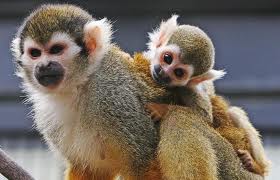
Squirrel Monkey or Mono Titi (in Spanish)… We´re too damn cute, don´t let us dissappear!

Literally everyday I have the pleasure of being visited by one of the cutest little jungle creatures you will ever encounter……the friendly Titi or Squirrel Monkeys of Manuel Antonio, Costa Rica. The particular species that swings through our trees, climbs on our roofs, and even occasionally gets in our houses are found ONLY in the Manuel Antonio area. Our blessing, is this little monkeys curse though, as with continued development in the surrounding areas of Manuel Antonio and Quepos, these beautiful little animals have slowly been completely cutoff from their natural wildlife corredor, meaning the Titis of Manuel Antonio no longer have anywhere else to go! This not only limits their ability to naturally flourish, but results in an elevated level of inbreeding, more sickness, and a weakening of the species over time, putting in danger this species´ long term existence.


Easily recognized by their soft light brown body furr, adorable little white with black facial "bigotes", long brown with bushy black tipped tails, and friendly incesant chatter, their tiny size and endearing faces draw oohs and ahhs from all that encounter them, making them clearly one of the main attractions in and around Manuel Antonio National Park, located on the Central Pacific Coast of tropical Costa Rica.

In search of a way to minimize the negative impact that this situation has caused, several local community organizations have emerged to help in the protection of this special little monkey. One of the most prominent in our area is www.kidssavingtherainforest.org. Some of their many objectives, has been the creation of ¨monkey bridges¨ throughout the area. These thick ropes are strategically placed where the monkeys naturally arrive to cross roads, highways or locations that have a large amount of electrical, phone, or other types of cables, or where the vegetation is not sufficient for monkeys to safely traverse. This helps the monkeys avoid electrocution, or from the creatures having to come down from the trees to continue their journey, a move that would make them terribly susceptible to predators, as well as other modern environmental hazards. This organization has also published an excellent list of 10 reasons why you should NOT feed the monkeys, which most hotels, restaurants and other businesses post in their establishments to help educate the community and the visiting tourists about the negative impact feeding the monkeys has. This not for profit organization has also been funding a wildlife rescue center for local injured monkeys and other animals, so you can now choose to visit and donate to their badly needed facility when in the Manuel Antonio area.


Another excellent organization developed specifically for the protection of the Titi Monkey is www.titiconservationalliance.org. The Titi Conservation Alliance was started in 2001 by a group of business owners within the tourist industry based around Manuel Antonio National Park, Costa Rica. Recognizing the need for conservation of their natural environment to maintain prosperity for their businesses, this group of entrepreneurs began the Alliance with the mission to promote sustainable development and to conserve the biodiversity of Costa Rica’s Central Pacific Region. Today, the Alliance is composed of member businesses and individuals dedicated to saving the endangered titi monkey, and its habitat. Through dues paid by member businesses, donations from concerned tourists wanting to help protect the beautiful areas they enjoy visiting, and the efforts of our staff and volunteers, the Titi Conservation Alliance is working to protect Costa Rica’s Central Pacific region through Sustainable Development, Habitat Reforestation, and Environmental Education.


For those of you coming to Costa Rica, or if you have been trying to decide where to go on your next vacation, consider the Manuel Antonio area of this beautiful country, where not only will you have the opportunity to see these endangered little Squirrel Monkeys, but where many businesses will donate a portion of what you spend in our area directly for the Squirrel Monkey´s protection, so future generations will be able to enjoy the ¨Mono Titi¨ too!

Author:
Kimberly Barron, originally from Malibu, California has lived in Parismina and Manuel Antonio, Costa Rica for 20 years. Starting as a certified tour guide, she spent 15 years managing fishing lodges on the Caribbean Coast and later 4* & 5* Hotels on the Pacific Coast of Costa Rica. Currently semi-retired, Kimberly still works as the Marketing Director for Byblos Resort & Casino and Hotel Makanda by the Sea.

Monday, October 29, 2012

Thank You from "Kids Saving the Rainforest"! Let's Hope your Great Support doesn't Stop Here!

Hotel Byblos Resort in conjunction with Kids Saving the Rainforest held a community fundraiser to collect funds and supplies to enable the continued care and operation of the only locally government sanctioned wild animal rescue center located near Costa Rica's world famous Manuel Antonio National Park last month. Thanks to all of you and the great support from our community, the event raised almost $5000!! Thank you! Thank you!!

Kids Saving The Rainforest, a not for profit Costa Rican organization and US non profit 501 C 3, was founded 13 years ago with the Monkey Bridge Program, and later expanded by an overwhelming community need to include an Animal Rescue Center for the Quepos and Manuel Antonio area.


Founded by two young girls who recognized the need to help the local wildlife as tourism developments began to effect their natural habitat, this will be Kids Saving the Rainforest first fundraiser since it was founded. Accustomed to bringing in enough proceeds for the Rescue Center through their own souvenir shop, with the downturn in the economy, this badly needed facility would have been forced to close it's doors if they couldn’t raise enough money to cover their monthly expenses. Now granted, the $5000 raised is only a temporary solution, but is gave KSTR some temporary breathing room to brainstorm more ways to help make the center self sustaining. Along with that, the added exposure of the Center's needs, has resulted in a substantial interest in participating in their volunteer programs, as well as increasing the number of paying visitor to their daily animal feeding tours.


As mentioned in our last KSTR post on this blog, "A full time resident vet, animal caretaker, volunteers and a guard
all live on the property helping to rehab the many injured or confiscated animals. Unfortunately, this comes with a certain fixed cost, not to mention the food, maintenance, vet supplies and numerous other items required to care for a variety of exotic animals.", laments rescue center coordinator Jennifer Rice. "The rescue center is the only legal facility in the Central Pacific area, and is a very necessary part of our community." adds Ms. Rice.

All injured wild animals are brought by the community or by MINAET, the government entity in charge of overseeing the National Park system. At present there are some 55 different animals being treated to include exotic birds, 4 species of monkeys, 2 species of sloths, armadillos, agoutis, coati mundis, marmesets, timirins, and other exotic wildlife. Most are eventually re-released in the wild, though some are beyond rehabilitation and must stay permanently at the rescue facility.

“Saving injured wildlife is an integral part of living in this area.” says Kimberly
Barron, Director of Marketing at Hotel Byblos. “This was not just a feel good fundraiser; these beautiful animals are one of the main attractions for tourism in our area. Local Manuel Antonio hotels and tourism operations that depend on National and International visitors cannot afford to ignore the need for a full service animal rescue center, and we are impressed that the community stepped up for the occasion. With the increase in awareness tours of the facility to area visitors, the rescue center's continued operation is a win win for all concerned and we are very excited about it's future if we can continue to keep the word out there.” adds Ms. Barron.


This fundraiser was just one step in the overall animal rescue plan for the Manuel Antonio, Costa Rica area, and with ongoing corporate and social responsibility programs of tourism operations
like www.bybloshotelcostarica.com, not only will the local wildlife benefit, but the local tourist economy as well. If you would like to help, it’s easy by shopping at the Kids Saving the Rainforest souvenir store located at Hotel Mono Azul. All proceeds go directly to saving the rainforest and the endangered animals of our area. For more information about how you can make a donation please call 506-2777-2592 or you can donate directly by clicking on the Kids Saving the Rainforest donation page.

It's a Jungle out There and our Jungle Friends Need Us Now!

Author: Kimberly Barron, originally from Malibu, California has lived in Parismina and Manuel Antonio, Costa Rica for 20 years. Starting as a certified tour guide, she spent 15 years managing fishing lodges on the Caribbean Coast and later 4* & 5* Hotels on the Pacific Coast of Costa Rica. Currently semi-retired, Kimberly still works as the Marketing Director for Byblos Resort & Casino and Hotel Makanda by the Sea.

Monday, November 9, 2009

Squirrel Monkey or Mono Titi (in Spanish)… We´re too damn cute, don´t let us dissappear!


Literally everyday I have the pleasure of being visited by one of the cutest little jungle creatures you will ever encounter……the friendly Titi or Squirrel Monkeys of Manuel Antonio, Costa Rica. The particular species that swings through our trees, climbs on our roofs, and even occasionally gets in our houses are found ONLY in the Manuel Antonio area. Our blessing, is this little monkeys curse though, as with continued development in the surrounding areas of Manuel Antonio & Quepos, these beautiful little animals have slowly been completely cutoff from their natural wildlife corredor, meaning the Titis of Manuel Antonio no longer have anywhere else to go! This not only limits their ability to naturally flourish, but results in an elevated level of inbreeding, more sickness, and a weakening of the species over time, putting in danger this species´ long term existence.
Easily recognized by their soft light brown body furr, adorable little white with black facial bigotes, long brown with bushy black tipped tails, and friendly incesant chatter, their tiny size and endearing faces draw oohs and ahhs from all that encounter them, making them clearly one of the main attractions in and around Manuel Antonio National Park, located on the Central Pacific Coast of tropical Costa Rica.
In search of a way to minimize the negative impact that this situation has caused, several local community organizations have emerged to help in the protection of this special little monkey. One of the most prominent in our area is www.kidssavingtherainforest.org. Some of their many objectives, has been the creation of ¨monkey bridges¨ throughout the area. These thick ropes are strategically placed where the monkeys naturally arrive to cross roads, highways or locations that have a large amount of electrical, phone, or other types of cables, or where the vegetation is not sufficient for monkeys to safely traverse. This helps the monkeys avoid electrocution, or from the creatures having to come down from the trees to continue their journey, a move that would make them terribly susceptible to predators, as well as other modern environmental hazards. This organization has also published an excellent list of 10 reasons why you should NOT feed the monkeys, which most hotels, restaurants and other businesses post in their establishments to help educate the community and the visiting tourists about the negative impact feeding the monkeys has.
Another excellent organization developed specifically for the protection of the Titi Monkey is www.titiconservationalliance.org. Their mission is to work to protect Costa Rica’s Central Pacific region through Sustainable Development, Habitat Reforestation, and Environmental Education. Started by local business owners and environmental and animal enthusiasts, this important group tirelessly fights for the protection of the Titi Monkeys and their habitat.
For those of you coming to Costa Rica, or if you have been trying to decide where to go on your next vacation, consider the Manuel Antonio area of this beautiful country, where not only will you have the opportunity to see these endangered little Squirrel Monkeys, but where many businesses will donate a portion of what you spend in our area directly for the Squirrel Monkey´s protection, so future generations will be able to enjoy the ¨Mono Titi¨ too!

Author: Kimberly Barron, originally from Malibu, California has lived in Parismina and Manuel Antonio, Costa Rica for 20 years. Starting as a certified tour guide, she spent 15 years managing fishing lodges on the Caribbean Coast and later 4* & 5* Hotels on the Pacific Coast of Costa Rica. Currently semi-retired, Kimberly still works as the Marketing Director for Byblos Resort & Casino and Hotel Makanda by the Sea.