Showing posts with label hotels in costa rica. Show all posts

Friday, April 27, 2012

Waiting for the Rainy Season to Start? Just listen for the "Yigüirro", Costa Rica's National Bird!

Costa Rica, a relatively small country, has some of the best bird watching opportunities in the entire world. The Official List of the Asociación Ornitológica de Costa Rica contains 857 species registered for an area of only 51,100 km2.....that's smaller than the state of West Virginia! This means Costa Rica boasts the greatest density of bird species of any continental American country, more than you can find in all of the United States and Canada combined!

This would bring visitors to believe that the Costa Rican


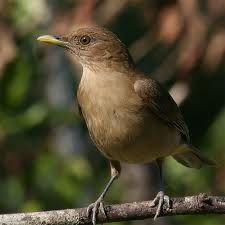
National Bird would be one of the more colorful and impressive species found in this small paradise......maybe a Resplendent Quetzal? A Keel Billed Toucan? Scarlet Macaws? Perhaps a Fiery Billed Ari Cari? But nooooo.......Costa Rica's National Bird is the Clay Colored Robin!!

If a plain old Robin sounds pretty boring for a National Bird, you would be right!! This rather dull colored and outwordly unimpressive bird is the last one you would think would represent a country with such an abundance of species to choose from as it's representative "ave".

In general appearance and habits, the Clay Colored Robin (scientific name: Turdus Grayi) resembles other thrushes such as the

American Robin. Averaging 9-10.5 inches in length, and weighing around approximately 6 ounces, the plumage is a dull brownish color, with a faintly streaked throat. The bill is greenish-yellow with a dark base, the legs are faint pink or flesh-colored, and the irises are reddish---all useful identification points, but just further proof that this is just a boring brown bird!

But wait!! Unbeknownest to most foreigners, the Clay Colored Robin has special abilities that make this species a very popular

bird throughout Costa Rica. In fact, in 1977, the Costa Ricans chose the "yigüirro" as a national symbol (over many much more colorful birds that inhabit this paradise) due to its strong and melodious song that always comes during the start of the rainy season. Due to it's tendency to comfortably live near houses and settlements, this species ability to "call in the rains" is not only handy for local farmers but everyday folk as well, so keep that umbrella handy!

In Costa Rica, the clay-colored robin is most commonly found in the Central Valley in human-altered areas like gardens and coffee plantations, but this species can be easily found countrywide. The bird has increased its range up over 6,500 feet in areas where forest has been cleared, so from sea level to higher elevations, the Clay Colored Robin gets around!

The typical robin's nest consists of a cup made of strips of vegetation bound with mud. A clutch is two or three eggs, with

incubation around 13 days. The young leave the nest after 13 more days, weighing a mere two ounces or so, looking much like their parents with some additional spots on the wings and breasts. Two or three broods are possible over the course of a productive nesting season.

Although not as bold as the robins of North America and Eurasia, the Clay-colored Robin in Costa Rica is still a friendly garden bird. They forage on the ground for worms and other invertebrates but tend to eat more fruit than other common robins. Clay-colored Robins will gorge themselves on backyard fruiting trees such as Oranges and Guayabas and also visit fruit feeders, so they are not hard to attract at all. These birds nest at the end of the dry season so their young can benefit from the abundance of food available at the start of the wet season.

The "Yigüirro" song is also considered good luck and a blessing. Yiguirros are probably one of the bird species that practice more the ECC or "Extra couple coitus", which means that both males and females look for mating with other birds out of their couple. The yiguirros can be quite territorial, which is one of the reasons they can be heard singing a lot, as they have to mark their territory or their couple will easily forget about them. Besides that, yiguirros have many beautiful songs used for different purposes, such as when threatened, when looking for a mate, before they go to sleep, at sunrise and even the peculiar rain call that they are famous for. Some of these songs are very complex phrases, full of color, which made yiguirros very popular caged song birds. For an extensive variety of these bird songs click here!

So if you’re coming to Costa Rica for some birdwatching activities, you’ll definitely want to keep an eye out for the ubiquitous

Clay Colored Robin, and for even more convenience you will know when to be carrying your umbrella. You might also want to have a copy of the new field identification guide published with Zona Tropical and Cornell University Press. It’s small enough to fit in your back pocket, yet deals with essentially all the species that one might see from the mainland. The illustrations alone will often suffice for identifying the bird you have just seen, but, on the facing page of each plate, range maps and texts are provided that should help to clinch the ID of whatever bird you are seeking. Of course, the book is available at Amazon, but you might want to consider ordering through ABA Sales, so that some of the proceeds will go towards supporting birding activities and conservation efforts.

So in summary, birding in Costa Rica is an extraordinary experience, offering bird enthusiasts unique opportunities within relatively short distances, involving very diverse habitats in the six ornitologic regions of the country, from sea level to high mountains.

Exciting guided tours and itineraries take you to wonderful locations where you are able to enjoy the best of birding and nature found in the middle of nowhere, or around literally every Costa Rican hotel throughout the country. And don't forget to listen for the melodious song of the famous Yiguerro, or you could get stuck in a rain shower without your umbrella!!


Author:
Kimberly Barron, originally from Malibu, California has lived in Parismina and Manuel Antonio, Costa Rica for 20 years. Starting as a certified tour guide, she spent 15 years managing fishing lodges on the Caribbean Coast and later 4* & 5* Hotels on the Pacific Coast of Costa Rica. Currently semi-retired, Kimberly still works as the Marketing Director for Byblos Resort & Casino and Hotel Makanda by the Sea.

Sunday, October 30, 2011

Costa Rica Mourns the Death of Tico Tarzan's "Pocho"

The sudden death by natural causes of the famous tamed Crocodile "Pocho" brought tears to Costa Ricans and other fans around the world. Our deepest sympathies to Chito for the loss of his good friend. May Pocho Rest in Peace!!
See funeral procession here:


For the history of the famous Pocho and Chito, read on.....

BROUGHT BACK BY POPULAR DEMAND!! At least once a month someone asks me about "Chito", better known as "Tico Tarzan", so I thought I would repeat this post!

Imagine upon moving to a foreign country one of the first persons you meet is fondly known by all as ¨Tico Tarzan¨! Officially named Gilberto Shedden, this 50 year old Costa Rica native fisherman, better known to his friends as "Chito", has gained this nickname by training and playing with his good friend “Pocho”. I know you’re thinking it’s a cute little monkey or chimp, thus the title ¨Tarzan¨, but you would be VERY mistaken. Pocho is Chito´s fully grown, pet American Crocodile! Rolling the large reptile on its back, pushing his head of razor sharp teeth under and above the water, as well as tenderly kissing Pocho right on the nose, this is no average Tarzan by any means! Even for Chito, who grew up in the jungles of Costa Rica, their games are much more than a planned tourist trap spectacle, it is a clear demonstration of an unusual friendship established over time between a normally dangerous crocodile and an anything but normal human who saw one of God’s creatures in need.

The unusual friendship with Pocho began more than 17 years ago when Chito found the then two meter American Crocodile adrift in the Parismina River. Located deep in the many miles of winding and remote natural and artificial canals of Tortuguero on the Caribbean coast of Costa Rica, the hapless crocodile had received a bullet in the head and was in bad shape and unlikely to live. Chito, a character that truly defies description, who is well known for the soft spot in his heart for any and all animals, took the injured crocodile into his humble home and nursed him back to health over the next several months. Feeding him small pieces of chicken and gently stroking him and doctoring his wounds, Pocho was amazingly receptive to the attention and over the next several months a special bond was created between the two.

I’ll never forget the first time we went to Chito´s house to have a few ¨cervezas¨ and Chito wanted to introduce us to his new friend. With Chito, you never knew what to expect, but nonetheless, I was a bit taken aback when he opened a door and there was Pocho! As a ¨newbie¨ to Costa Rica and this small Caribbean Village on the Atlantic side of Costa Rica, I kept thinking to myself, ¨Can this be normal?¨ Happily, it is not, but as one gets to know the eccentric Chito, it just really did not seem that odd either, as he always had a menagerie of wild animals that he was in the process of nursing back from the dead, with the hope of returning them to the wild!

Living in such a remote location, and being of humble means, a veterinarian was not in the cards for Chito or Pocho, so the entire care and recuperation of the crocodile fell on Chito himself. When it was thought Pocho had recovered sufficiently to survive on his own once again, Chito left his beloved Crocodile pet in a small nearby pond to carry out the many years he would hopefully have left in his life. But even to Chito´s surprise, the reptile chose to leave the water, following Chito back to his house and instead choosing to live in the canal in front of Chito´s property. Realizing that Pocho and he had apparently cemented a unique new friendship, daily visits and swimming sessions became part of their incredible bonding process and a source of much entertainment for the locals. Much to the dismay of family and friends, Chito continued to swim and play with the rapidly growing crocodile, teaching him a series of commands, including death rolls, tail slaps, back floats, belly rubs, swims and skims and even closing his eyes on cue!

As word spread of the crazy antics of Chito and Pocho, the entrepreneurial light bulb went off in Chito´s head. People began to naturally seek these two characters in the remote village of Barra de Parismina to see for themselves this incredible phenomenon, but this proved difficult due
to the remote location of this small village. Now relocated to a small lake on Chito´s other farm on the outskirts of the town of Siquirres, this unlikely duo attracts multitudes of people, both National and International travelers weekly to experience for themselves the ¨Tico Tarzan Show¨. Dressed only in well worn shorts and his customary sweat band in place on his forehead, Chito enters the water with absolutely no safety equipment or even ambulance drivers on call, where he leads Pocho, and at times Pocho leads Chito, through a series of acrobatic stunts and amazing tricks, including the lifting and slapping of his enormous tail with great force on the water, as visitors look on at the gigantic reptile in amazement from the safety of the railing of the ¨typical¨ style lakeside restaurant or ¨soda¨.

It is estimated that Pocho is around 50 years old, weighs approximately 990 pounds and measures in the area of 4.5 meters. The American Crocodile is a species of crocodilian found primarily in Central America. It is the most widespread of the four species of crocodiles found on the entire American Continent. Populations occur from the Atlantic and Pacific coasts of southern Mexico to South America and stretching as far as Peru and even Venezuela. There is a remnant population of about 2000 in Florida, United States. The habitat of the American crocodile consists largely of coastal areas, though they are quite common in canals and other inlets, so caution should be exercised when in these areas. The American crocodile is larger than some other crocodile species, with some males reaching lengths of 6.1 metres (20 ft) in Central and South America. Full grown adult males of this species have no natural predators and are capable of preying on virtually any animal unfortunate enough to be at the waters edge. It is estimated they can live up to 70 years in captivity, so Chito and Pocho may continue to entertain us for many years to come, barring any accidents that is!


Author: Kimberly Barron, originally from Malibu, California has lived in Parismina and Manuel Antonio, Costa Rica for 20 years. Starting as a certified tour guide, she spent 15 years managing fishing lodges on the Caribbean Coast and later 4* & 5* Hotels on the Pacific Coast of Costa Rica. Currently semi-retired, Kimberly still works as the Marketing Director for Byblos Resort & Casino and Hotel Makanda by the Sea.

Monday, June 27, 2011

DNA tells the Tale of Two Branches of the Coconut Palm


(This fascinating article is a republish courtesy of the Washington University St. Louis. Original article published on June 23 online issue of the journal PLoS One.)

The “Coconut”, the fruit of the palm Cocos nucifera, is the Swiss Army knife of the plant kingdom. In one neat package it provides a high-calorie food, potable water, fiber that can be spun into rope, and a hard shell that can be turned into charcoal. What’s more, until it is needed for some other purpose it serves as a handy flotation device.

No wonder people from ancient Austronesians to Captain Bligh pitched a few coconuts aboard before setting sail. The mutiny of the "Bounty" is supposed to have been triggered by Bligh’s harsh punishment of the theft of coconuts from the ship’s store.

So extensively is the history of the coconut interwoven

with the history of people traveling that Kenneth Olsen, a plant evolutionary biologist, didn’t expect to find much geographical structure to coconut genetics when he and his colleagues set out to examine the DNA of more than 1,300 coconuts from all over the world.

“I thought it would be mostly a mish-mash,” he says, thoroughly homogenized by humans schlepping coconuts with them on their travels.

He was in for a surprise. It turned out that there are two clearly differentiated populations of coconuts, a finding that strongly suggests the coconut was brought under cultivation in two separate locations, one in the Pacific basin and the other in the Indian Ocean basin. What’s more, coconut genetics also preserve a record of prehistoric trade routes and of the colonization of the Americas.

The discoveries of the team, which included Bee Gunn, now of the Australian National University in Australia, and Luc Baudouin of the Centre

International de Recherches en Agronomie pour le Développement in Montpellier, France, as well as Olsen, associate professor of biology at Washington University in St. Louis, are described in the June 23 online issue of the journal PLoS One.

Before the DNA era, biologists recognized a domesticated plant by its morphology. In the case of grains, for example, one of the most important traits in domestication is the loss of shattering, or the tendency of seeds to break off the central grain stalk once mature.

The trouble was it was hard to translate coconut morphology into a plausible evolutionary history.

There are two distinctively different forms of the coconut fruit, known as niu kafa and niu vai, Samoan names for traditional

Polynesian varieties. The niu kafa form is triangular and oblong with a large fibrous husk. The niu vai form is rounded and contains abundant sweet coconut “water” when unripe.

“Quite often the niu vai fruit are brightly colored when they’re unripe, either bright green, or bright yellow. Sometimes they’re a beautiful gold with reddish tones,” says Olsen.

Coconuts have also been traditionally classified into tall and dwarf varieties based on the tree habit, or shape. Most coconuts are talls, but there are also dwarfs that are only several feet tall when they begin reproducing. The dwarfs account for only 5 percent of coconuts.

Dwarfs tend to be used for eating fresh, and the tall forms for coconut oil and for fiber.

“Almost all the dwarfs are self fertilizing and those three traits — being dwarf, having the rounded sweet fruit, and being self-pollinating — are thought to be the definitive domestication traits,” says Olsen.

“The traditional argument was that the niu kafa form was the wild, ancestral form that didn’t reflect human selection, in part because it was better adapted to ocean dispersal,” says Olsen. Dwarf trees with niu vai fruits were thought to be the domesticated form.

The trouble is it’s messier than that. “You almost always find coconuts

near human habitations,” says Olsen, and while the niu vai is an obvious domestication form, the niu kafa form is also heavily exploited for copra, the dried meat ground and pressed to make oil, and coir, fiber woven into rope.”

“The lack of universal domestication traits together with the long history of human interaction with coconuts, made it difficult to trace the coconut’s cultivation origins strictly by morphology,” Olsen says.

The project got started when Ms. Gunn, who had long been interested in palm evolution, and who was then at the Missouri Botanical Garden, contacted Olsen, who had the laboratory facilities needed to study palm DNA.

Together they won a National Geographic Society grant that allowed Ms. Gunn to collect coconut DNA in regions of the western Indian Ocean for which there were no data. The snippets of leaf tissue from the center of the coconut tree’s crown she sent home in zip-lock bags to be analyzed.

“We had reason to suspect that coconuts from these regions —especially Madagascar and the Comoros Islands — might show evidence of ancient gene flow events brought about by ancient Austronesians setting up migration routes and trade routes across the southern Indian Ocean,” Olsen says.

Olsen’s lab genotyped 10 microsatellite regions in each palm sample.

Microsatellites are regions of stuttering DNA where the same few nucleotide units are repeated many times. Mutations pop up and persist pretty easily in these regions because they usually don’t affect traits that are important to survival and so aren’t selected against, says Olsen. “So we can use these genetic markers to fingerprint the coconut,” he says.

The new collections were combined with a vast dataset that had been established by the French agricultural research center, using the same genetic markers. “These data were being used for things like breeding, but no one had gone through and systematically examined the genetic variation in the context of the history of the plant,” Olsen says.

The most striking finding of the new DNA analysis is that the Pacific and Indian Ocean coconuts are quite distinct genetically. “About a third of the total genetic diversity can be partitioned between two groups that correspond to the Indian Ocean and the Pacific Ocean,” says Olsen.


“That’s a very high level of differentiation within a single species and provides pretty conclusive evidence that there were two origins of cultivation of the coconut,” he says.

In the Pacific, coconuts were likely first cultivated in island Southeast Asia, meaning the Philippines, Malaysia, Indonesia, and perhaps the continent as well. In the Indian Ocean the likely center of cultivation was the southern periphery of India, including Sri Lanka, the Maldives, and the Laccadives.

The definitive domestication traits — the dwarf habit, self-pollination and niu vai fruits — arose only in the Pacific, however, and then only in a small subset of Pacific coconuts, which is why Olsen speaks of origins of cultivation rather than of domestication.

“At least we have it easier than scientists who study animal domestication,” he says. “So much of being a domesticated animal is being tame, and behavioral traits aren’t preserved in the archeological record.”

One exception to the general Pacific/Indian Ocean split is the western Indian Ocean, specifically Madagascar and the Comoros Islands, where Ms. Gunn had collected. The coconuts there are a genetic mixture of the Indian Ocean type and the Pacific type.

Olsen and his colleagues believe the Pacific coconuts were introduced to

the Indian Ocean a couple of thousand years ago by ancient Austronesians establishing trade routes connecting Southeast Asia to Madagascar and coastal east Africa.

Olsen points out that no genetic admixture is found in the more northerly Seychelles, which fall outside the trade route. He adds that a recent study of rice varieties found in Madagascar shows there is a similar mixing of the japonica and indica rice varieties from Southeast Asia and India.

To add to the historical shiver, the descendants of the people who brought the coconuts and rice are still living in Madagascar. The present-day inhabitants of the Madagascar highlands are descendants of the ancient Austronesians, Olsen says.

Much later the Indian Ocean coconut was transported to the New World by Europeans. The Portuguese carried coconuts from the Indian Ocean to the West Coast of Africa, Olsen says, and the plantations established there were a source of material that made it into the Caribbean and also to coastal Brazil.

So the coconuts that found today in Florida are largely the Indian Ocean type, Olsen says, which is why they tend to have the niu kafa form.


On the Pacific side of the New World tropics, however, the coconuts are Pacific Ocean coconuts. Some appear to have been transported there in pre-Columbian times by ancient Austronesians moving east rather than west.

During the colonial period, the Spanish brought coconuts to the Pacific coast of Mexico from the Philippines, which was for a time governed on behalf of the King of Spain from Mexico.

This is why, Olsen says, you find Pacific type coconuts on the Pacific coast of Central America and Indian type coconuts on the Atlantic coast.

“The big surprise was that there was so much genetic differentiation clearly correlated with geography, even though humans have been moving coconut around for so long.”

Far from being a mish-mash, coconut DNA preserves a record of human cultivation, voyages of exploration, trade and colonization.

With the above information, we now know more about the colonization around the world by just following the leads of the coconut DNA! So if you

haven’t tried the different varieties of Coconut found around the world, and more specifically, the types found here in Costa Rica, why wait any longer? Whether looking for a refreshing and healthy beverage (think “Pipa” in Costa Rica), or a tasty snack or unique flavor for whatever dish you may be preparing (think “Coco” in Costa Rica), both types are readily available on both coasts, so get your Tropical vibe on!!

Much more about coconuts in future blog posts!! It’s the fruit that keeps on giving!!

Author:
Kimberly Barron, originally from Malibu, California has lived in Parismina and Manuel Antonio, Costa Rica for 20 years. Starting as a certified tour guide, she spent 15 years managing fishing lodges on the Caribbean Coast and later 4* & 5* Hotels on the Pacific Coast of Costa Rica. Currently semi-retired, Kimberly still works as the Marketing Director for Byblos Resort & Casino and Hotel Makanda by the Sea.

Sources:
www.plosone.org/article/info%3Adoi%2F10.1371%2Fjournal.pone.0021143
Bee F. Gunn1, Luc Baudouin2, Kenneth M. Olsen3*
1 Division of Evolution, Ecology and Genetics, Research School of Biology, The Australian National University, Canberra, Australia, 2 Centre International de Recherches en Agronomie pour le Développement (CIRAD), Montpellier, France, 3 Biology Department, Washington University, St. Louis, Missouri, United States of America
www.amcostarica.com
www.wikipedia.org/wiki/Cocos_nucifera
www.kew.org/plant-cultures/plants/coconut_history.html
www.wikipedia.org/wiki/Indian_Ocean
www.islandsbusiness.com/islands_business/index_dynamic/containerNameToReplace=MiddleMiddle/focusModuleID=19252/overideSkinName=issueArticle-full.tpl
www.cookislands.bishopmuseum.org/showarticle.asp?id=15
http://www.mobot.org/
Monday, May 9, 2011

Boutique Hotels in Costa Rica? Should they be Added to the Endangered List?


Walking down memory lane to the 1990’s, Costa Rica welcomed their first world class hotel chain, the Spanish firm known as Barceló. Specializing in the “All Inclusive” style of lodging, this style of travel did not take much of a foothold in this country, and the Boutique Hotel market remained the most popular choice for tourist accommodations. Now we fast forward some 20 years and Costa Rica hosts some 9 major hotel chains! Everything from Marriott, to Best Western, Intercontinental, Hilton, Choice, Wyndham, Four Seasons and the most recent group….Riu, now serve as the main players, with more jumping in each year. Does this mean the Boutique Hotel concept is ready for the endangered list in Costa Rica?

History:
The "boutique" style is said to have been created in New York back in 1984, though there are valid arguments that in 1981 both London and San Francisco boasted the first boutique sized hotels. Most likely, 1984 might be when the term “boutique hotel” actually was coined, with the term coming into more mainstream use. Entrepreneurs Ian Schrager and Steve Rubell opened the boutique Morgans New York on Madison Avenue in the heart of Manhattan, and the concept grew by leaps and bounds from there. Morgans was small, stylish and unique, unlike the big brand-name hotels that predominated the markets at that time. The actual term "boutique hotel" was said to be coined by Rubell himself, who described their new hotel venture as being like a boutique as opposed to a department store. A very succinct analogy if you ask me!

Description:
The most defining characteristics of boutique style hotels are that they are generally small properties, with less than 100 rooms and more often averaging between 3 and 50 rooms total. They take great pride in offering a super chic atmosphere, unique design and décor, contemporary styling and quite popular these days, a rich historical value or background. Most boutique hotels provide highly personalized service, with very hands-on staff, management and/or ownership, offering a genuine personality that just can’t be found in the large hotel chains. Services can be limited depending on the size and luxury level of the property or you can often find some of the most dynamic local and gourmet restaurants, world class spas, and other unique features that make them stand out from the standard hotel offering. The concept has been so successful, that most multi-national hotel corporations have begun to brand their own chains of boutique resorts in order to try to capture a share of this huge market.

Locations:
Still a popular choice for hotels in Costa Rica, the concept of “boutique”, “design” or “lifestyle” hotels, as they are often referred, has spread throughout the world, to include European & East Asian countries, appearing in such places as Indonesia, mainland China, Japan, Iceland, Turkey, India & the Middle East, just to name a few. They continue to remain popular options throughout Central and South America as well or basically anywhere that provides a desirable destination for travel. I am fairly certain that you will find some sort of boutique hotel in almost any corner of the world these days!

Target Market:
There are no longer cookie cutter molds for guests seeking the “Boutique experience”. Travelers are constantly looking for something new and different, while definitely expecting more than the simple comforts once acceptable to the average vacationista. Whether planning a business trip, destination wedding, honeymoon getaway, adults only escape, or just an overdue vacation, when planning travel, guests more often than not seek properties that are noticeably different in look and feel from the large branded hotels. Boutique hotels now even present a certain level of social branding. Those staying at these establishments are often considered as trendy, daring, fashionable, hip travelers that are quite often more ecologically minded. Since boutique facilities and their pricing can vary dramatically, there are now boutique properties designed to suit every demographic, any price range or social class, always with the idea of creating an unforgettable “guest experience” that just cannot be found in the larger hotel properties.

Competition:
Boutique hotels retain certain benefits when it comes to cost of operations and overall profitability. They often have a large customer base to work with, as well as being favored by smaller travel agencies or tour operators that are looking to sell the “experiential” concept that the boutique hotel property has to offer. Since boutique hotel owners do not have to pay a franchise fee to be part of a larger chain, the hotel can often operate with a lower overhead that adding costly amenities such as restaurants, spas and convention & meeting spaces would create. However, these added amenities can generate significant profitability and appeal to the hotel's bottom line, so more often than not you will find every sort of amenity imaginable in todays boutique hotel properties. Another benefit for boutique hotel owners is that well established small properties tend to have a higher rate of repeat and word of mouth business compared to normal industry standards, which can save on boutique sized marketing budgets rarely able to compete with the huge marketing budgets of large branded properties. Nevertheless, successful boutique hotels must continually adapt to the constantly changing trends, needs, tastes, preferences, and technology in order to remain competitive in this cut throat hotel market.

In the end, whether it's the most isolated green hotel getaway, the most unique historical location, the most private white sand beach, impeccable five-star white glove service, or you are just looking for that travel environment that loans their son’s boogey board, gives you cookies from their kitchen, offers the most incredible personalized guest services, or located in the most super chic locale, boutique hotels in every instance cater to their guests every need and whim. Who doesn’t want that kind of attention on their hard earned vacation?

So for your next Costa Rica vacation, bypass that mega chain hotel and try one of the many Costa Rican Boutique Hotels, you will be personally helping keep these unique properties off Costa Rica’s endangered list!!

If you have a favorite boutique hotel you have visited, please feel free to share it with us in the comments section!!

Author: Kimberly Barron, originally from Malibu, California has lived in Parismina and Manuel Antonio, Costa Rica for 20 years. Starting as a certified tour guide, she spent 15 years managing fishing lodges on the Caribbean Coast and later 4* & 5* Hotels on the Pacific Coast of Costa Rica. Currently semi-retired, Kimberly still works as the Marketing Director for Byblos Resort & Casino and Hotel Makanda by the Sea.

Sources:
www.independent.co.uk
www.travelandleisure.com
www.bizymoms.com
www.travels.com
www.wikipedia.org
www.ehow.com
www.wisegeek.com
www.hospitalitynet.org

Friday, February 18, 2011

Costa Rica Classic International Billfish Tournament Returns to Quepos Costa Rica!


Quepos, Costa Rica, long considered one of the top sport fishing destinations in Costa Rica, plays host to the popular Costa Rica Classic International Billfish Tournament to be held March 10-12, 2011.

The Costa Rica Classic International Billfish Tournament which in years past was hosted in Quepos, had been held


Join us for the Costa Rica Classic!!
at the Los Suenos Marina in previous years, but once again returns to our popular area. This classic match up of some of the top International and Local Anglers will take the town by storm, with proceeds set to benefit the Boomer Esiason Foundation. This World renowned event is scheduled to be held at the brand new Marina Pez Vela, Quepos’ newest tourist attraction. Many nearby Manuel Antonio Hotels, as well as Hotels in Quepos will be offering special room rates for anglers, their crews and other fishing aficionados, but don’t wait too long, as space is limited for this popular fishing event!

The Event
The welcoming Cocktail Reception will be held March 10th at Hotel Mariposa in Manuel Antonio. Fishing teams will consist of a minimum two anglers per boat with
Offshore Fishing at it's Best!!
up to six anglers per boat permitted. Individual anglers will be assigned to a team by tournament directors. This is a “Benefit Tournament” and modified IGFA rules apply. This is a Gentlemen’s tournament, and we are here to have fun, catch fish, make friends and help a great cause. THE HONOR SYSTEM APPLIES. Fishing on March 11 and 12 are lines in at 8:30am and out at 3:30pm, boats can depart the marina at 6:20am but no lines in the water until
8:30am. Boats must be back at the docks by 5:30pm. No electric reels are permitted, all rods, reels, line and leader must meet IGFA specifications. Any Billfish, Marlin, Stripe Marlin, Sailfish, Spearfish, Swordfish, regardless of size will be released in accordance with IGFA and tournament rules.

The Cause
The Boomer Esiason Foundation is a dynamic partnership of leaders in the medical and business communities joining with a committed core of volunteers to heighten awareness, education and the quality of life for those affected by cystic fibrosis,
Help us help this great cause!
while providing financial support to research aimed at finding a cure. The Boomer Esiason Foundation’s staff is comprised of individuals with expertise in cystic fibrosis and program development, event planning and fundraising, marketing and communications, and management. The Board of Directors includes leaders in the business community who generously give of their time and resources in support of BEF’s critical mission. These dedicated people may come from all walks for life, but they all agree on one thing: they’ll do whatever it takes to beat cystic fibrosis. This is more than just a fishing tournament, this could help change people’s lives!

Quepos, Costa Rica
Boasting some 17 IGFA Records, Quepos, Costa Rica is considered one of the best locations in the world for big game sportfishing. A small town some 160 km from
The town of Quepos, Costa Rica
the capital city of San Jose, Quepos can be found on Costa Rica's central Pacific Coast, only 2.5 hours driving or a quick 25 minute domestic flight from the Juan Santa Maria International Airport. Although wildly popular for it’s sport fishing, the town of Quepos is conveniently located only minutes from Manuel Antonio National Park, Costa Rica’s most visited and popular Park. Tourists are not only afforded fantastic fishing opportunities, but a wide variety of other tours and activities are readily available only minutes from local Costa Rica Hotels, fine restaurants, spas and bars. The town
center is a 5 block square filled with many eateries, farmers markets, art galleries and souvenier shops, all situated near the new beach front sea wall. If you happen to visit here during festival times, the streets are filled with dancing, parades and local concerts.

The Marina Pez Vela
Located in one of the most spectacular fishing locations in the world, Marina Pez Vela in Quepos, Costa Rica when completed will offer all

the amenities and services you’d expect to find in a five-star marina resort. Touted to soon be the finest full service marina you will find in all of Central America, just one visit to the 55+ acres of land and water at Marina Pez Vela will exceed the expectations of even the most demanding sportfishing, boating and yachting enthusiasts. Presently under continuing construction, the 300 concrete floating dock slips will eventually accommodate boats up to 200 feet. The first 100 slips opened June 2010 and surround the perimeter of the basin which will offer complete amenities of a first class marina facility. The marina slips are available for sale (with revenue sharing when rented out) or available for short and long-term renting. From 35' up to 200', Marina Pez Vela has opened up a new opportunity for boaters to explore the finest waters in all of Central America. Once you arrive here, you will not want to leave!

How Can I Participate?
For further information about this fun and important fishing event, I invite you to check out the official Costa Rica Classic website at www.costaricaclassic.com or for further information about Cycstic Fibrosis and how you can support or donate to this worthy cause, please check out their website at www.esiason.org.

What Else??
The Quepos area will also play host to the upcoming Costa Rica Challenge,

another popular fishing tournament scheduled for March 17-20, 2011. So, if you’re busy in early March, you still have time to catch the “Big One” later that month! This will be the 3rd Annual CF & MS Fishing Tournament benefiting the Multiple Sclerosis Society and the Cystic Fibrosis Foundation, both important causes that desperately need your support! Join us where the Rainforest Meets the Sea for one or better yet, both of these popular fishing tournaments!

Check out some of the great action from a past tournament:


Author:
Kimberly Barron, originally from Malibu, California has lived in Parismina and Manuel Antonio, Costa Rica for 20 years. Starting as a certified tour guide, she spent 15 years managing fishing lodges on the Caribbean Coast and later 4* & 5* Hotels on the Pacific Coast of Costa Rica. Currently semi-retired, Kimberly still works as the Marketing Director for Byblos Resort & Casino and Hotel Makanda by the Sea.


Sunday, January 16, 2011

Tico Tarzan! Can we ever get enough of this Costa Rica Adventure?

BROUGHT BACK BY POPULAR DEMAND!! At least once a month someone asks me about "Chito", better known as "Tico Tarzan", so I thought I would repeat this post!

Imagine upon moving to a foreign country one of the first persons you meet is fondly known by all as ¨Tico Tarzan¨! Officially named Gilberto Shedden, this 50 year old Costa Rica native fisherman, better known to his friends as "Chito", has gained this nickname by training and playing with his good friend “Pocho”. I know you’re thinking it’s a cute little monkey or chimp, thus the title ¨Tarzan¨, but you would be VERY mistaken. Pocho is Chito´s fully grown, pet American Crocodile! Rolling the large reptile on its back, pushing his head of razor sharp teeth under and above the water, as well as tenderly kissing Pocho right on the nose, this is no average Tarzan by any means! Even for Chito, who grew up in the jungles of Costa Rica, their games are much more than a planned tourist trap spectacle, it is a clear demonstration of an unusual friendship established over time between a normally dangerous crocodile and an anything but normal human who saw one of God’s creatures in need.

The unusual friendship with Pocho began more than 17 years ago when Chito found the then two meter American Crocodile adrift in the Parismina River. Located deep in the many miles of winding and remote natural and artificial canals of Tortuguero on the Caribbean coast of Costa Rica, the hapless crocodile had received a bullet in the head and was in bad shape and unlikely to live. Chito, a character that truly defies description, who is well known for the soft spot in his heart for any and all animals, took the injured crocodile into his humble home and nursed him back to health over the next several months. Feeding him small pieces of chicken and gently stroking him and doctoring his wounds, Pocho was amazingly receptive to the attention and over the next several months a special bond was created between the two.

I’ll never forget the first time we went to Chito´s house to have a few ¨cervezas¨ and Chito wanted to introduce us to his new friend. With Chito, you never knew what to expect, but nonetheless, I was a bit taken aback when he opened a door and there was Pocho! As a ¨newbie¨ to Costa Rica and this small Caribbean Village on the Atlantic side of Costa Rica, I kept thinking to myself, ¨Can this be normal?¨ Happily, it is not, but as one gets to know the eccentric Chito, it just really did not seem that odd either, as he always had a menagerie of wild animals that he was in the process of nursing back from the dead, with the hope of returning them to the wild!

Living in such a remote location, and being of humble means, a veterinarian was not in the cards for Chito or Pocho, so the entire care and recuperation of the crocodile fell on Chito himself. When it was thought Pocho had recovered sufficiently to survive on his own once again, Chito left his beloved Crocodile pet in a small nearby pond to carry out the many years he would hopefully have left in his life. But even to Chito´s surprise, the reptile chose to leave the water, following Chito back to his house and instead choosing to live in the canal in front of Chito´s property. Realizing that Pocho and he had apparently cemented a unique new friendship, daily visits and swimming sessions became part of their incredible bonding process and a source of much entertainment for the locals. Much to the dismay of family and friends, Chito continued to swim and play with the rapidly growing crocodile, teaching him a series of commands, including death rolls, tail slaps, back floats, belly rubs, swims and skims and even closing his eyes on cue!

As word spread of the crazy antics of Chito and Pocho, the entrepreneurial light bulb went off in Chito´s head. People began to naturally seek these two characters in the remote village of Barra de Parismina to see for themselves this incredible phenomenon, but this proved difficult due
to the remote location of this small village. Now relocated to a small lake on Chito´s other farm on the outskirts of the town of Siquirres, this unlikely duo attracts multitudes of people, both National and International travelers weekly to experience for themselves the ¨Tico Tarzan Show¨. Dressed only in well worn shorts and his customary sweat band in place on his forehead, Chito enters the water with absolutely no safety equipment or even ambulance drivers on call, where he leads Pocho, and at times Pocho leads Chito, through a series of acrobatic stunts and amazing tricks, including the lifting and slapping of his enormous tail with great force on the water, as visitors look on at the gigantic reptile in amazement from the safety of the railing of the ¨typical¨ style lakeside restaurant or ¨soda¨.

It is estimated that Pocho is around 50 years old, weighs approximately 990 pounds and measures in the area of 4.5 meters. The American Crocodile is a species of crocodilian found primarily in Central America. It is the most widespread of the four species of crocodiles found on the entire American Continent. Populations occur from the Atlantic and Pacific coasts of southern Mexico to South America and stretching as far as Peru and even Venezuela. There is a remnant population of about 2000 in Florida, United States. The habitat of the American crocodile consists largely of coastal areas, though they are quite common in canals and other inlets, so caution should be exercised when in these areas. The American crocodile is larger than some other crocodile species, with some males reaching lengths of 6.1 metres (20 ft) in Central and South America. Full grown adult males of this species have no natural predators and are capable of preying on virtually any animal unfortunate enough to be at the waters edge. It is estimated they can live up to 70 years in captivity, so Chito and Pocho may continue to entertain us for many years to come, barring any accidents that is!


Author: Kimberly Barron, originally from Malibu, California has lived in Parismina and Manuel Antonio, Costa Rica for 20 years. Starting as a certified tour guide, she spent 15 years managing fishing lodges on the Caribbean Coast and later 4* & 5* Hotels on the Pacific Coast of Costa Rica. Currently semi-retired, Kimberly still works as the Marketing Director for Byblos Resort & Casino and Hotel Makanda by the Sea.

Tuesday, December 7, 2010

“Mamon Chino” in Costa Rica. Have you tried this exotic fruit yet?


The "Mamon Chino", also known as “Rambutan”, is a colorful and interesting exotic fruit found on medium-sized tropical trees producing one of the most popular convenience snacks found in Costa Rica. Thought to be native to Malaysia, this fruit is also commonly found in Indonesia, the Philippines, Sri Lanka and Southeast Asia. The Mamo Chino is closely related to several other edible tropical fruits including the Lychee, Longan, and Mamoncillo. The name rambutan came from the Malay word rambut, whose literal translation means hairy, logical when you see the distinctive “hair” that covers the skin of this small fruit.

Description:
A hearty tree growing to an average height of 30-60 feet, the flowers are small and emit a faintly sweet pleasant scent. Mature trees in fruition brim with oval shaped fruit bunches that grow in a loose hanging clusters of around 10-20 specimens. The rather thick and clean peeling skin is generally reddish, orange or yellow in color and is covered with a thick hairy texture, making this fruit easy to identify. The coveted flesh of the fruit is translucent, whitish or a very pale pink, with a sweet, slightly acidic flavor, similar to that of grapes, but with it’s own uniquely tropical flavor. Be careful not to ingest the large single seed found buried within the sweet fleshy part, as it can be mildly poisonous when raw, but can be eaten when cooked properly. (I have personally never tried that, so anyone who has, feel free to chime in on how that works!) The seed is also said to be high in certain fats and oils valuable for industrial uses, as well as the oils are used to manufacture soap products. Beyond that, the roots of the Rambutan tree, as well as the bark and leaves are touted to have various medicinal uses and have been used in the production of certain dyes and coloring compounds.

What to do with the fruit:
A mainstay at Farmer’s Markets countrywide, roadside fruit stands are another great place to find the freshest Mamon Chino. Traditionally eaten by easily peeling the fruit with your fingers (it practically peels itself into two pieces) or you can often see locals open them with a quick flick of their teeth, popping the fruit directly into their mouth. The sweet creamy pulp of the fruit is easily enjoyed by putting the whole fruit inside the mouth and sucking on the pulp, remembering not to swallow the large seed. Disposing of the seed takes a practiced spitting launch, or better educated friends discreetly discard it into their hand or the bag the fruits came in. Despite the light color of the fruit's flesh, remember to be careful, as the juice will stain a dark brown color, the reason indigenous Indians used to use Rambutan to dye cloth. Though most commonly eaten fresh in Costa Rica, you can find Mamon Chino jams and jellies, and it is now even canned in some locations. It would be important for me to mention……when using the common Costa Rican name (Mamon Chino), its important to know that the word “mamón” in some Spanish-speaking countries can be slang for a “person who sucks”, or more commonly it can refer to a “large breast”. Just giving a fair warning to my friends before you go to the Farmers Market yelling “I want Mamones”!

Production:
When CAFTA (Central American Free Trade Agreement) was in negotiations throughout the region, Costa Rica noted that this new agreement presented an excellent opportunity to expand the production of this little known fruit to International markets. Costa Rica, having little actual data on the production of this fruit within the country had the government entity known as “MAG” (Ministerio de Agricultura), launch a nationwide in-depth study to find out more about the cultivators of this crop, with the hope of bringing them the economic benefits that would result from expansion to an International marketplace. The results of this extensive study, primarily conducted in Costa Rica’s “Brunca and Atlantic Región”, was the first stage of a strategic crop development plan conducted by Ingienero Leonte Llach Cordero for the National Program of Tropical Fruits, a division of MAG. The initial results are listed below:

Results of Study (Dec 2003)
• Total Cultivators 354
• Estimated Hectares in Production-720
• Approximate Total Production per year-5.5 millon kilos
• Number of Adult Trees (over 4 yrs)-46,365
• Number of Trees under 4 yrs-49,839
• Amount of Cultivators with less than 20 Hectars-350
• Amount of Cultivators with more than 20 Hectars-4
• Most productive season-July to September
• Percentage of Local Market Production-+90%
• Estimated number of trees per Hectar-100 trees

The results of this study were extremely helpful in furthering the development of this tropical fruit to be competitive in an international market. As the Ministerio de Agricultura (MAG) began a program to distribute some 40,000 tree starts to farmers, their enthusiasm, pioneer attitude and excellent farming practices, helped to dramatically increase overall production by a whopping 20% in only 6 yrs. This impressive number converted Costa Rica to be the top producer of Mamon Chino in all of Central America. Costa Rica now exports an incredible 1800 tons of this delicious fruit yearly.

So my friends, the next time you see these hairy little fruits at your Costa Rica Hotel, the local Farmer’s Market, local “Pulperia” (market), or a roadside fruit stand…… Stop! Buy!! Eat!! Don’t be afraid of them!!! Not only are these tropical delights delicious and convenient to snack on, but they also have specific nutritional qualities, as well as ancient medicinal uses that might come in handy one day. Just please remember no yelling “I want Mamones!” while in Costa Rica when you go shopping, or you might end up with a black eye!!

Author: Kimberly Barron, originally from Malibu, California has lived in Parismina and Manuel Antonio, Costa Rica for 20 years. Starting as a certified tour guide, she spent 15 years managing fishing lodges on the Caribbean Coast and later 4* & 5* Hotels on the Pacific Coast of Costa Rica. Currently semi-retired, Kimberly still works as the Marketing Director for Byblos Resort & Casino and Hotel Makanda by the Sea.

Sources:
http://www.mag.go.cr/biblioteca_virtual_economia_desarr_sociolog/rambutan_censo.pdf
http://www.simas.org.ni/revistaenlace/articulo/1091
http://costaricahoy.info
http://en.wikipedia.org/wiki/Rambutan
http://nal.usda.gov

Wednesday, April 28, 2010

New Addition to Endangered list in Costa Rica…..Boutique Hotels?


Walking down memory lane to the 1990’s, Costa Rica welcomed their first world class hotel chain, the Spanish firm known as Barceló. Specializing in the “All Inclusive” style of lodging, this style of travel did not take much of a foothold in this country, and the Boutique Hotel market remained the most popular choice for tourist accommodations. Now we fast forward some 20 years and Costa Rica hosts some 9 major hotel chains! Everything from Marriott, to Best Western, Intercontinental, Hilton, Choice, Wyndham, Four Seasons and the most recent group….Riu, now serve as the main players, with more jumping in each year. Does this mean the Boutique Hotel concept is ready for the endangered list in Costa Rica?

History:
The "boutique" style is said to have been created in New York back in 1984, though there are valid arguments that in 1981 both London and San Francisco boasted the first boutique sized hotels. Most likely, 1984 might be when the term “boutique hotel” actually was coined, with the term coming into more mainstream use. Entrepreneurs Ian Schrager and Steve Rubell opened the boutique Morgans New York on Madison Avenue in the heart of Manhattan, and the concept grew by leaps and bounds from there. Morgans was small, stylish and unique, unlike the big brand-name hotels that predominated the markets at that time. The actual term "boutique hotel" was said to be coined by Rubell himself, who described their new hotel venture as being like a boutique as opposed to a department store. A very succinct analogy if you ask me!

Description:
The most defining characteristics of boutique style hotels are that they are generally small properties, with less than 100 rooms and more often averaging between 3 and 50 rooms total. They take great pride in offering a super chic atmosphere, unique design and décor, contemporary styling and quite popular these days, a rich historical value or background. Most boutique hotels provide highly personalized service, with very hands-on staff, management and/or ownership, offering a genuine personality that just can’t be found in the large hotel chains. Services can be limited depending on the size and luxury level of the property or you can often find some of the most dynamic local and gourmet restaurants, world class spas, and other unique features that make them stand out from the standard hotel offering. The concept has been so successful, that most multi-national hotel corporations have begun to brand their own chains of boutique resorts in order to try to capture a share of this huge market.

Locations:
Still a popular choice for hotels in Costa Rica, the concept of “boutique”, “design” or “lifestyle” hotels, as they are often referred, has spread throughout the world, to include European & East Asian countries, appearing in such places as Indonesia, mainland China, Japan, Iceland, Turkey, India & the Middle East, just to name a few. They continue to remain popular options throughout Central and South America as well or basically anywhere that provides a desirable destination for travel. I am fairly certain that you will find some sort of boutique hotel in almost any corner of the world these days!

Target Market:
There are no longer cookie cutter molds for guests seeking the “Boutique experience”. Travelers are constantly looking for something new and different, while definitely expecting more than the simple comforts once acceptable to the average vacationista. Whether planning a business trip, destination wedding, honeymoon getaway, adults only escape, or just an overdue vacation, when planning travel, guests more often than not seek properties that are noticeably different in look and feel from the large branded hotels. Boutique hotels now even present a certain level of social branding. Those staying at these establishments are often considered as trendy, daring, fashionable, hip travelers that are quite often more ecologically minded. Since boutique facilities and their pricing can vary dramatically, there are now boutique properties designed to suit every demographic, any price range or social class, always with the idea of creating an unforgettable “guest experience” that just cannot be found in the larger hotel properties.

Competition:
Boutique hotels retain certain benefits when it comes to cost of operations and overall profitability. They often have a large customer base to work with, as well as being favored by smaller travel agencies or tour operators that are looking to sell the “experiential” concept that the boutique hotel property has to offer. Since boutique hotel owners do not have to pay a franchise fee to be part of a larger chain, the hotel can often operate with a lower overhead that adding costly amenities such as restaurants, spas and convention & meeting spaces would create. However, these added amenities can generate significant profitability and appeal to the hotel's bottom line, so more often than not you will find every sort of amenity imaginable in todays boutique hotel properties. Another benefit for boutique hotel owners is that well established small properties tend to have a higher rate of repeat and word of mouth business compared to normal industry standards, which can save on boutique sized marketing budgets rarely able to compete with the huge marketing budgets of large branded properties. Nevertheless, successful boutique hotels must continually adapt to the constantly changing trends, needs, tastes, preferences, and technology in order to remain competitive in this cut throat hotel market.

In the end, whether it's the most isolated green hotel getaway, the most unique historical location, the most private white sand beach, impeccable five-star white glove service, or you are just looking for that travel environment that loans their son’s boogey board, gives you cookies from their kitchen, offers the most incredible personalized guest services, or located in the most super chic locale, boutique hotels in every instance cater to their guests every need and whim. Who doesn’t want that kind of attention on their hard earned vacation?

So for your next Costa Rica vacation, bypass that mega chain hotel and try one of the many Costa Rican Boutique Hotels, you will be personally helping keep these unique properties off Costa Rica’s endangered list!!

If you have a favorite boutique hotel you have visited, please feel free to share it with us in the comments section!!

Author: Kimberly Barron, originally from Malibu, California has lived in Parismina and Manuel Antonio, Costa Rica for 20 years. Starting as a certified tour guide, she spent 15 years managing fishing lodges on the Caribbean Coast and later 4* & 5* Hotels on the Pacific Coast of Costa Rica. Currently semi-retired, Kimberly still works as the Marketing Director for Byblos Resort & Casino and Hotel Makanda by the Sea.

Sources:
www.independent.co.uk
www.travelandleisure.com
www.bizymoms.com
www.travels.com
www.wikipedia.org
www.ehow.com
www.wisegeek.com
www.hospitalitynet.org

Sunday, March 28, 2010

Easter in Costa Rica....Religious Parades, Beach Escapes & the Famous Miel de Chiverre!


Easter Week, or Semana Santa, is easily one of the most important weeks of the year for Costa Ricans. Full of important religious ceremonies celebrating the death and resurrection of Jesus Christ, this predominantly Catholic country finds most locals spending this week with family in prayer, heading out to the beach areas for a short vacation, or more commonly a combination of both. Traffic can be horrendous, in part because on Good Friday public bus routes shut down completely to allow employees time to celebrate the holiday with their own families. Public transportation options become limited and can be extremely crowded and inconvenient during this holiday.

In most areas of Costa Rica, the local Catholic Church organizes traditional masses, as well as daily religious processions or celebratory parades generally starting on Holy Wednesday, and continuing through Holy Thursday, Good Friday and Easter Sunday. Sometimes these ceremonies start as early as Monday, continuing through the entire week. Usually consisting of dramatic reenactments of Jesus’ journey through Jerusalem to his crucifixion and resurrection, with fake blood in place, some of the graphic depictions are not always pleasurable for the faint of heart.

Actors, dressed as Roman soldiers, take part with a host of other easily recognized characters in the journey towards Jesus’ eventual death. Most commonly spotted in these processions or local parades are Angels, Mary Magdalene, Saint Joseph, the Virgin Mary, Apostles and naturally, Jesus, the most coveted dramatic role of all. Participants proclaim to have lived the last year free of sin, while following closely the church’s teachings, though this point could be argued in many a town. Nonetheless, considered a very serious event, large numbers of spectators line the streets to mourn, pray and celebrate.

Traditionally during Holy Week, practicing Catholics prepare special dishes centering around the main ingredient, Seafood. Keeping in line with the observance of not eating meat on Fridays during Lent, delicious typical Costa Rican dishes are shared, such as rice and shrimp, fish ceviche, fried whole fish, canned tuna, as well as a variety of local desserts such as empanadas, rice pudding, rosquillas (donuts), polvorones (cookies), eggnog, Chicha (a hot drink made from aguadulce, ginger and cinnamon), and a popular jelly made from “chiverre”, a large squash similar to a watermelon. (See recipe below.)

Catholics are given all of Lent to attend Confession, while church hours are expanded to accommodate higher numbers arriving to confess before Easter, since the sacrament is not available Thursday through Sunday. The extended hours also allow further preparation for the processions including decorating and cleaning the religious effigies, many of which will take part in up to 10 processions, requiring different colored clothing for each one.

Tourists visiting Costa Rica, or “Ticos” not attending religious ceremonies with family, all head for the beach, converting sleepy beach towns into overcrowded party zones, while hotels in both small towns and tourist hubs throughout the country are in normal years completely booked months in advance. Travelers on roads leading to and from the coastal towns can sit in traffic for hours. San Jose and other Metropolitan Areas become literally deserted ghost towns as all government institutions, schools and banks close from Thursday to Sunday, or as is the case this year, many are closing from Sunday to Sunday.

In recent years, the common practice of enforcing the “Dry Law” during Holy Week has become a bit more relaxed, with enforcement by police officials sporatic and unorganized, especially in high tourist zones. The Dry Law specifies that as of midnight on Wednesday, all bars, restaurants and liquor stores close, and no alchohol can be served or sold until Saturday. According to Catholic tradition, followers are to refrain from drinking alchoholic beverages during the mourning of Jesus Christ, until his resurrection on Easter Sunday. Even though the majority of the Costa Rican population is Catholic, many citizens stock up on liquor and beer to take them through the festive week, while other entrepreneurial spirits make a side business of selling beer and liquor out the back door or even the trunk of their car during those dates.

Though many a devoted churchgoer may still choose to indulge in a drink or two, superstitions abound, and Ticos are known to keep an eye over their shoulder during this time. Many won’t swim in the ocean on Holy Thursday or Friday, fearing they will drown because God is angry. Others believe you can turn into a fish if you get in the water on Holy Friday. Another common superstition is the thought that the earth gets hotter, causing more earthquakes during this time. Surprisingly, this has been fairly true this year, but is more likely just a coincidence. An older superstition states that it is a sin to drive a car during Holy Week, and some small towns are said to still throw nails on the street to deter anyone who would consider the sin of driving during these dates. I thankfully have personally never seen this done in my 20 years of living in Costa Rica.

In one particular town, Ortega de Santa Cruz in Guanacaste, men continue to participate in an age old tradition that involves capturing a large crocodile with their bare hands on Good Friday and tying it up to put on display in the center of town. Even though the animal is released the following day, the tradition has been under scrutiny of animal and environmental conservationists for years and each year is said to be the last. Unfortunately, it has also grown in popularity as many curiosity seekers head to the small town to witness the exhibition in person.

On the positive side, it is widely agreed upon that some of the best weather and certainly some of the best sunsets of the year happen during Holy Week, another excellent reason to be at the beach. So should you find yourself in Costa Rica during this holiday week, feel free to come join in the festivities and be sure to try the Chiverre Jelly listed below!!


Miel de Chiverre
Ingredients:
Large chiverre
Dulce de caña in (2) tapas or 1 kilo of granular brown sugar
cinnamon
cloves
250 grams brown tamarindo seeds (Optional)
250 grams of coconut pieces or flakes (Optional)
(Tapas of dulce de caña are the little circular blocks of brown sugar available at every Costa Rican market.)
Preparation:
Over a fire or using a kitchen burner, char as much as possible of the shell of the chiverre.
When done, hit the shell firmly with a hammer to expose the contents which looks like spaghetti squash or fine hairs.
Put the insides in a clean pillowcase and use the clothes drier to reduce the moisture.
When the chiverre contents are drier, cook it in a big sturdy pot over low heat. Cover the entire flesh of the chiverre with whichever sugar you are using, white, brown or the tapa. Sprinkle with the tamarindo seeds, cinnamon, cloves, lemon or orange peel and if desired, the coconut. The chiverre will naturally produce enough liquid to complete this process.
Cover the pot and let it cook slowly over low heat for 90 minutes, stirring often to avoid sticking.
Allow to cool and either transfer to a jar or use for other dishes.
The jelly is widely used in dessert empanadas, cookies and other dishes where a touch of sweetness is desired.

Author: Kimberly Barron, originally from Malibu, California has lived in Parismina and Manuel Antonio, Costa Rica for 20 years. Starting as a certified tour guide, she spent 15 years managing fishing lodges on the Caribbean Coast and later 4* & 5* Hotels on the Pacific Coast of Costa Rica. Currently semi-retired, Kimberly still works as the Marketing Director for Byblos Resort & Casino and Hotel Makanda by the Sea.